More than an essay: putting Armenia’s education system under examination

Recent student protests across Europe have put education into the spotlight, renewing a fundamental debate: how much does a country spend on education and what does that money actually achieve? In Armenia, this question became the starting point for an in-depth investigation led by the Media for Education NGO, with the support of EU. Bringing together independent journalism, pedagogical expertise and economic analysis, the organisation set out to examine whether rising public funding translates into better learning outcomes and meets the real needs of schools, teachers and students. By identifying gaps and advocating for improvements, it sought to bring teachers’ and students’ concerns to the attention of decision-makers.
Founded by journalists and teachers in Yerevan in 2023, Media for Education believes the sector deserves the same level of scrutiny as any other major public policy area. “We see education as a driving force for the country’s development, that is why we decided to promote more professional media coverage of education and the challenges it faces,” says Anush Martirosyan, the NGO’s head. “This means understanding problems from inside and bringing them to public attention. We investigate issues primarily flagged by teachers and consult a wider community of educators before deciding how to act.”
In 2025, with EU support via the Armenian Lawyers Association, the organisation put this principle into practice through three complementary initiatives: analysing public education expenditure, involving young people in budget monitoring, and investigating students’ ability to think critically and express their ideas through writing.
Is more money improving education quality?
Armenia’s education budget has been growing steadily, with high annual increases between 2020 and 2023 and an unprecedented surge in 2024. Yet teachers’ dissatisfaction persists. To understand why, Media for Education set out to examine public expenditure and education policy objectives over the period 2021-2025, comparing financial investments with actual school needs and academic results.
The findings revealed a gap between spending and results. For example, despite increased funding for children with special educational needs, most families continued to seek support from specialised organisations outside mainstream schools. Similarly, the research found that rising expenditure on education quality had not been matched by improvements in how related measures were put into practice. “Although state funding increased by over 26% between 2020 and 2024, the Education Inspection Body’s assessments of Armenian language dictations and mathematics exams across dozens of schools showed that students’ results had actually worsened compared to the year before,” says Elena, a young economist involved into the research.
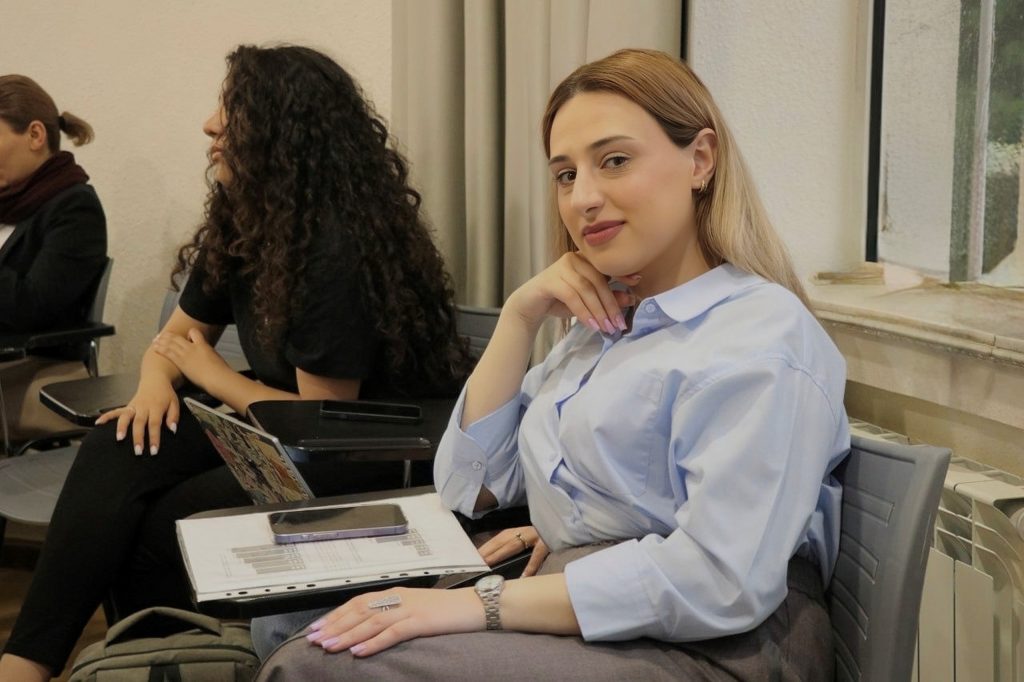
Elena (24) is a financial analysist who was invited by Media for Education NGO to encourage young people’s participation in monitoring public expenditure and to bring economic expertise into its investigation’s activities. Her work of comparing budget trends with education performance data contributed to 42 published materials. “I have always been interested in the state budget. This analysis made me understand that simply pumping more money into the system isn’t enough. True progress requires examining how that money is spent and how it ensures qualitative improvements in the classroom,” says Elena.
Getting policymakers to listen
Media for Education turned its findings into five recommendations addressed to the Ministry of Education, Science, Culture and Sport. Four of them received a positive response, already translating into practical changes.
The proposals addressed several areas. The first called for better preparation of examination test writers and revising testing standards to ensure fairer assessments. The government confirmed that funding had been allocated, and acknowledged the need for further work. It also accepted the second recommendation to make the voluntary teacher attestation process more transparent by publishing not only the number of complaints received but also the issues they raise. In July 2025, the government introduced a further improvement which allowed teachers to report separately on technical problems with the electronic attestation system, for such issues to be addressed immediately. Funding for voluntary teacher attestation is also set to increase, with AMD 17.95 billion (about €45.48 million) allocated for 2027, 20% more than in 2026.
Between 2020 and 2025, Armenia’s education spending averaged around 2.5% of GDP, increasing to 3% in the 2026 budget. Against this background, another recommendation called on the government to set a clear target and deadline for increasing education spending to at least 4% of GDP, in line with UNESCO recommendations. The government subsequently included a target of approaching this level by 2030 among its policy objectives. The fourth recommendation addressed a more immediate concern: children going through the school day without proper meals because many schools lack canteens. A state-funded school meal pilot initiative began in two Yerevan schools in September 2026, with the aim of reaching all 48,000 schoolchildren in the capital by the end of 2028.
But not all five recommendations made it through. One concerned a particularly controversial reform: the nationwide introduction of essay exams for ninth-grade students, despite evidence that neither students nor teachers were ready. The recommendation to reconsider this reform was rejected. Rather than accepting the decision, Media for Education took a different route, turning the setback into the starting point for a new advocacy campaign.
When an essay becomes a test of the education system
“I have noticed over the years that children cannot formulate and write their thoughts; they do not have connected speech.” Nelli Hayrapetyan is an Armenian language and literature teacher with over 35 years of experience. She saw this as a deeper problem than writing ability: students struggled to understand and analyse texts, draw conclusions and develop their own arguments – the exact skills needed for essay-writing. This observation led her to suggest that Media for Education examine ninth-graders’ examination essays.
The NGO took up the idea when Armenia introduced a new integrated essay examination, initially piloted in nine schools in Tavush. In 2024, it examined around 60 essays and found that only about 30% reached the minimum threshold. Some students even copied passages from the assignment text instead of developing their own arguments. A comparison with 95 essays written in 2025 showed no improvement.
“The Ministry rejected our proposal to delay the rollout, arguing that postponing the exam would be unfair to schools in Tavush, where it had already been piloted. It also referred to the newly introduced State Educational Standards and maintained that the difficulties should be addressed through greater support rather than by delaying the new requirements,” says the NGO’s head.
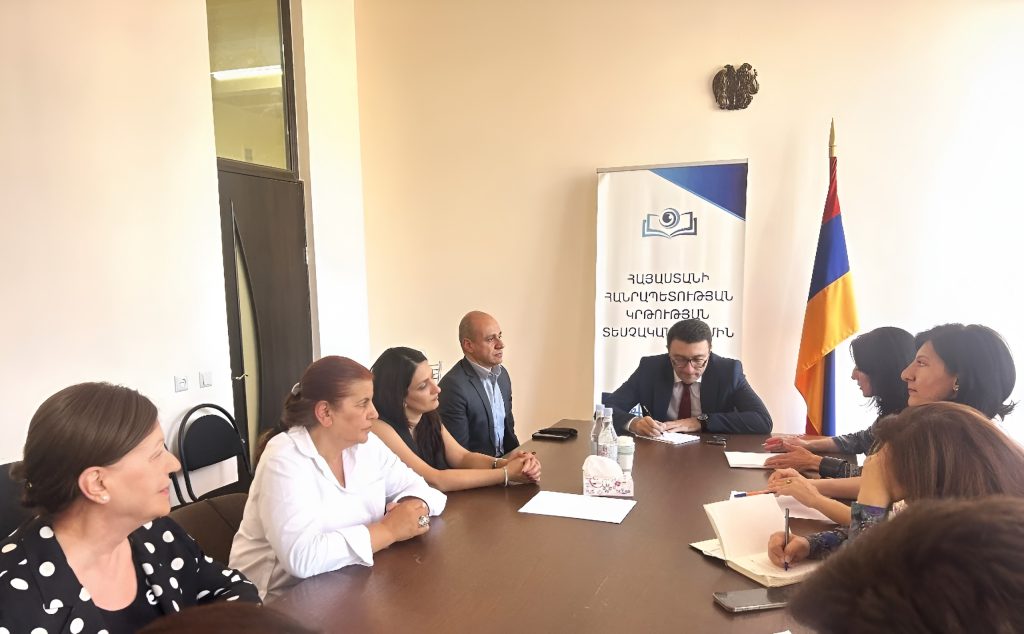
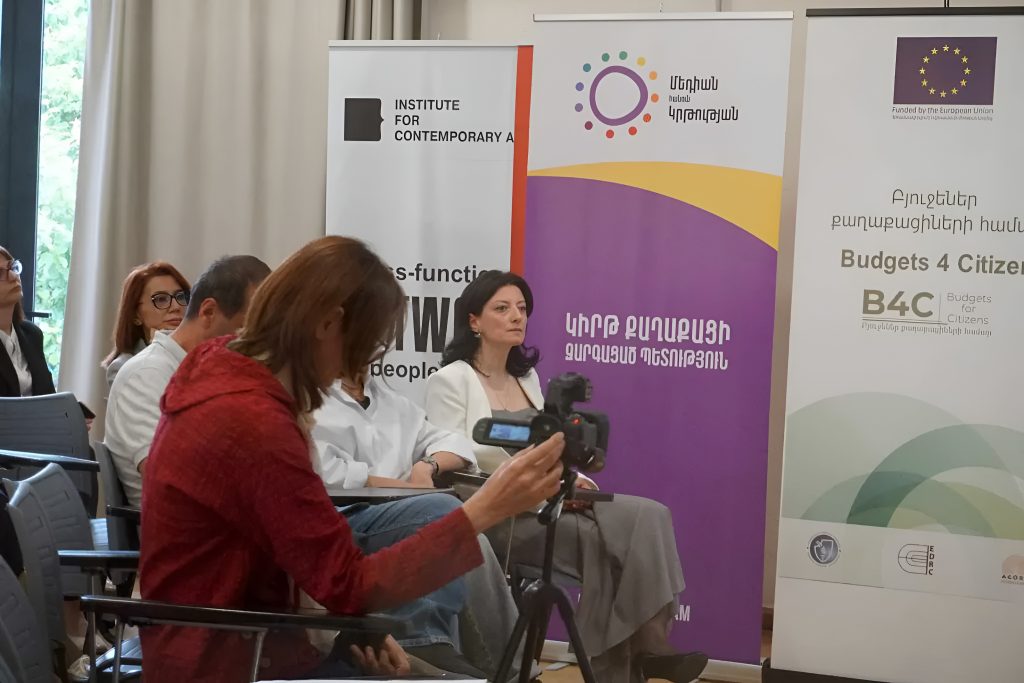
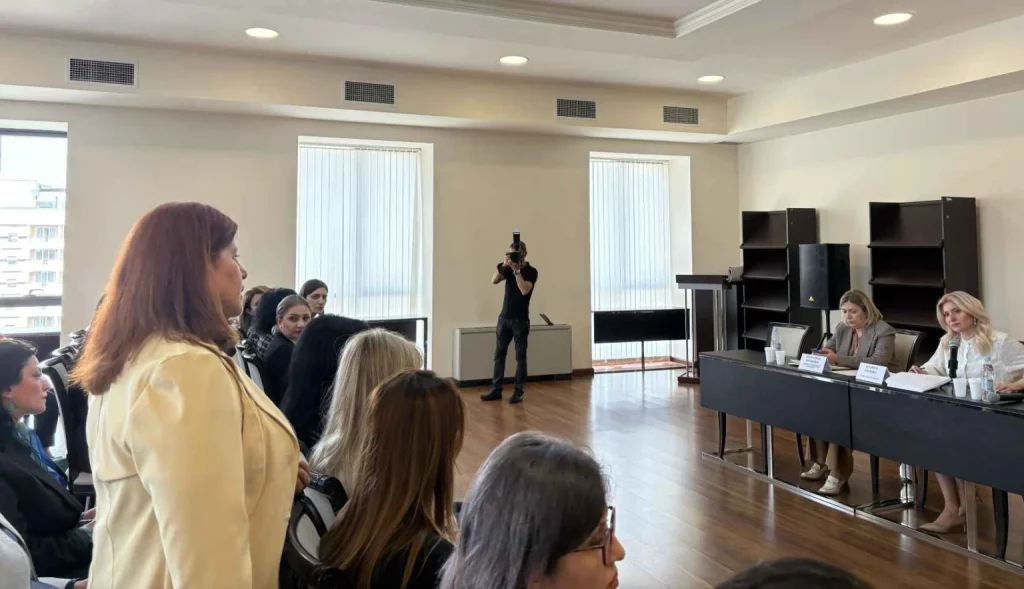
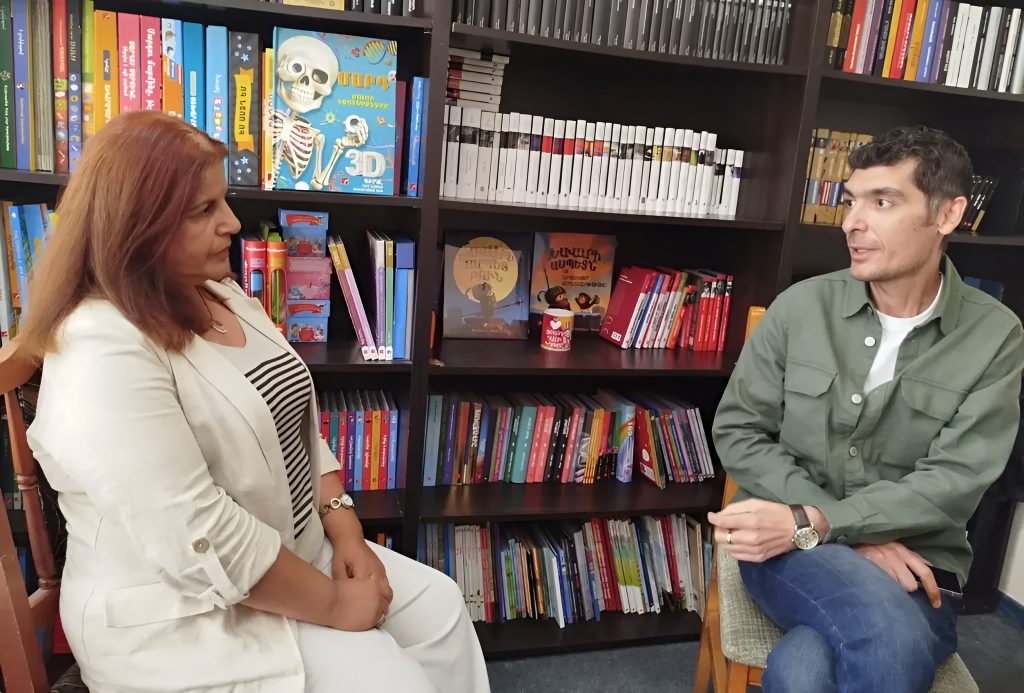
The rejection forced the NGO to rethink its advocacy approach. Instead of continuing to push for a postponement, it turned its attention to making the examination more workable for students. Its proposals included removing cross-cutting concepts from essay assignments, separating literature and history rather than the required combining both in a single essay, and giving students a choice between an assigned topic, a free-topic essay and text analysis. This shift brought its first results: cross-cutting concepts were removed from the examination tasks, and the Ministry published a new guide to teaching essay writing.
The research had a positive impact in the classroom too. “I began focusing more on text analysis, giving students more time to work in depth with shorter texts rather than simply covering longer texts to meet the curriculum requirements,” says Nelli about changing her own approach. “Thanks to this, all my students can now identify at least one argument when analysing a text – something many of them struggled to do before.”
The positive shifts inspired Media for Education to build on its work by following up on its recommendations, tracking how policy decisions are put into practice and documenting their impact on teachers and students. “When a teacher, a journalist and an economist look together at what problems exist, what is being spent to address them and what information is available, we can understand the issue much better,” stresses Anush Martirosyan. By bringing these perspectives together, the NGO aims to keep public spending under scrutiny and ensure that education policy is judged not by the money allocated, but by the difference it makes in the classroom.
Authors: Volha Prokharava, Lamara Malkhasyan
The post More than an essay: putting Armenia’s education system under examination appeared first on EU NEIGHBOURS east.


