From one Lingua Franca to many: How Eastern Europe is changing the languages it speaks

If you were to walk through a university corridor in Chișinău or Kyiv today, you would likely hear far more than just Ukrainian or Romanian. Across lecture halls and common areas, a wide variety of European languages is being used in distinctly practical ways: students weaving English into their mother tongue mid-sentence, some preparing for a test by repeating German verb conjugations, others stuck on a video call with their friends from Italy.
Not long ago, that same corridor would have felt far more uniform. A single lingua franca once handled nearly all cross-border communication. Today, that dynamic has completely shifted. Step into a classroom in Moldova or Ukraine and you will find students choosing between French, German, Polish, Italian and Spanish, not only as an option for elective courses but as a choice for their future.
Talk to a 19-year-old in either country about which language they are studying and why, and you will hear something closer to a strategy than a habit. English for the job market, Polish for a semester abroad, German and French because of a scholarship application requirement and Italian to stay in touch with someone they met at a youth forum last summer.
You can find the complete comparison table for student enrolment into language classes in Moldova and Ukraine here. English has become the default baseline in both countries, though the numbers diverge noticeably. In Ukraine, nearly 95% of pupils study English as their primary foreign language, making it the overwhelming standard on the national exit exams alongside German, French and Spanish. Moldova sits lower, near 79%. English remains the leader there, but the gap leaves considerable room for a secondary language, French, to take root.
Moldova’s heavy enrollment in French comes down to institutional policy. Moldova joined the Organisation internationale de la Francophonie in the 1990s, signed a bilateral linguistic pact in 2018 to integrate French curriculum into public schools and hosts one of the largest Alliance Française branches in Europe in Chișinău. The state deliberately funded the pipeline, trained teachers and secured exchange programmes, producing an artificially high and stable rate of French enrollment.
Ukraine’s interest in Polish follows a geographic logic instead. A shared border drives cross-border commerce, family ties, and migration of all forms, creating a practical demand that Ukrainian schools and regional universities meet with dedicated Polish classes.
Minority language statistics reflect geography rather than elective interest. Gagauz accounts for nearly 20,000 pupils in Moldova because it is taught within the Autonomous Territorial Unit of Gagauzia in the south. Hungarian appears almost exclusively in Ukraine’s Zakarpattia region, anchored by historical communities with their own school networks. Bulgarian features modestly across both states, concentrated around Taraclia in southern Moldova and the Bolhrad district in Ukraine’s Odesa oblast. These numbers capture where established native-speaking communities actually live.
Moldovan secondary education reflects this mixed landscape. Romanian remains central, but the foreign-language track has diversified. English is effectively mandatory by the time students sit their Bacalaureat, French maintains its second-place foothold through state backing, and lyceums increasingly offer German or Italian. Italian in particular clusters in communities with substantial diaspora networks established by labour migration to southern Europe.
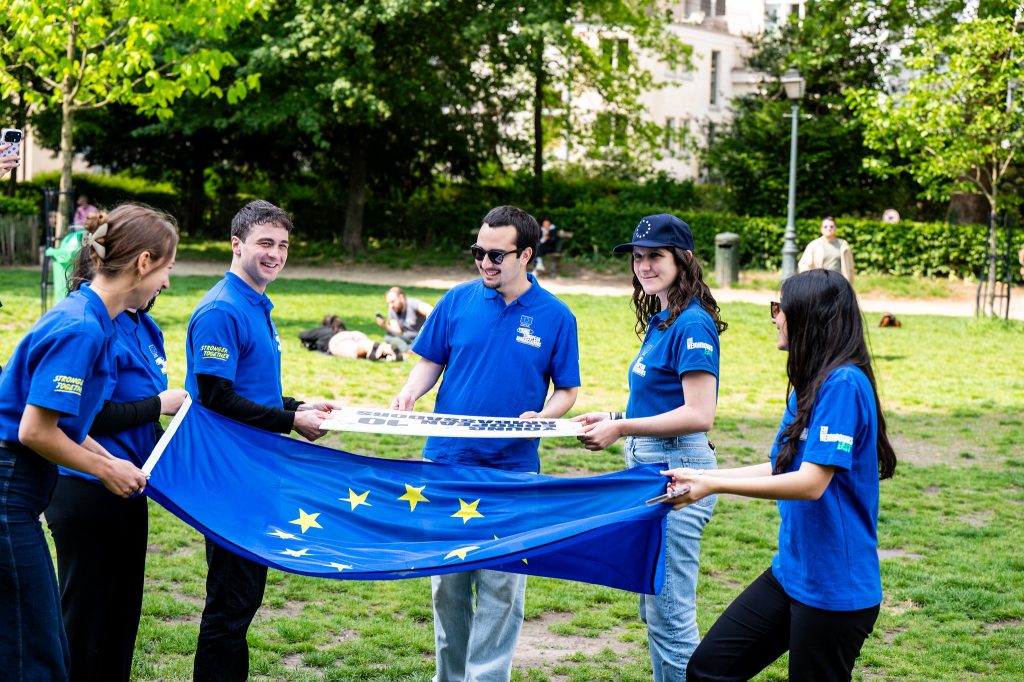
Universities are continuing this tendency even further. Both countries are expanding dual-degree programmes with EU partner institutions, teaching full modules in foreign languages. Erasmus+ has become a significant part of the study curriculum, requiring language proficiency sufficient to follow lectures and pass exams in foreign countries. Some universities have adjusted their language departments by adding preparatory courses and online language assessments to get students ready for the exchange even before they board their plane.
The digital space is giving even better opportunities for the development of multilingualism in these countries. It’s not so rare to hear from a scholar that they are having weekly speaking clubs paired with partner classrooms in Krakow or Leon. It helps teens to learn the language not only by its grammatical aspects or academic means, but also by finding the motivation to really want to understand what their foreign friends are telling them. It turns boring language classes into a fun international experience with less memorisation and more actual conversations with people their age, who live their teenage lives somewhere in the EU.
School enrollment trends for specific language classes accelerated once physical movement became easier. The European Union granted visa-free travel to Moldova in 2014 and to Ukraine in 2017. Direct train connections, regional bus networks and low-cost flights turned border crossings into routine trips. Navigating transit hubs, ordering food and reading train schedules in Warsaw, Vienna or Berlin gave teenagers direct contact with foreign languages long before graduation.
Curricular electives act as functional investments. Selecting a secondary language signals where a student intends to look for higher education, job opportunities, or family networks in five to ten years. A Moldovan student taking advanced French is positioning themself for specific university track or regional administrative tasks.
Few students leave school completely fluent in three languages, but their secondary choices are deliberate. English provides the baseline, while subsequent selections reflect specific plans; Polish for an exchange semester in Kraków, German for engineering programmes, French for public administration or Italian to stay in touch with friends from the last volunteering with ESC. Aggregated across school systems, these elective tracks outline how a new generation is quietly realigning its economic and cultural ties to the rest of Europe.
For these young people, language learning equals a new set of opportunities and space to find a like-minded community. That is the underlying theme of this year’s European Day of Languages – ‘Languages unite!’ The choice of foreign languages in Moldova and Ukraine is no longer taken by default. They represent a conscious, daily choice by young people stepping into a shared European space.
The post From one Lingua Franca to many: How Eastern Europe is changing the languages it speaks appeared first on EU NEIGHBOURS east.


