Events


The butterfly effect: how small volunteer actions trigger big community change 

The butterfly effect: how small volunteer actions trigger big community change  For many young people, life in a small Armenian village can feel quietly stale. Jobs are scarce and often seasonal, and many families rely on relatives working abroad. This makes young people focus more on everyday survival rather than on personal ambitions. With limited […]

The butterfly effect: how small volunteer actions trigger big community change 

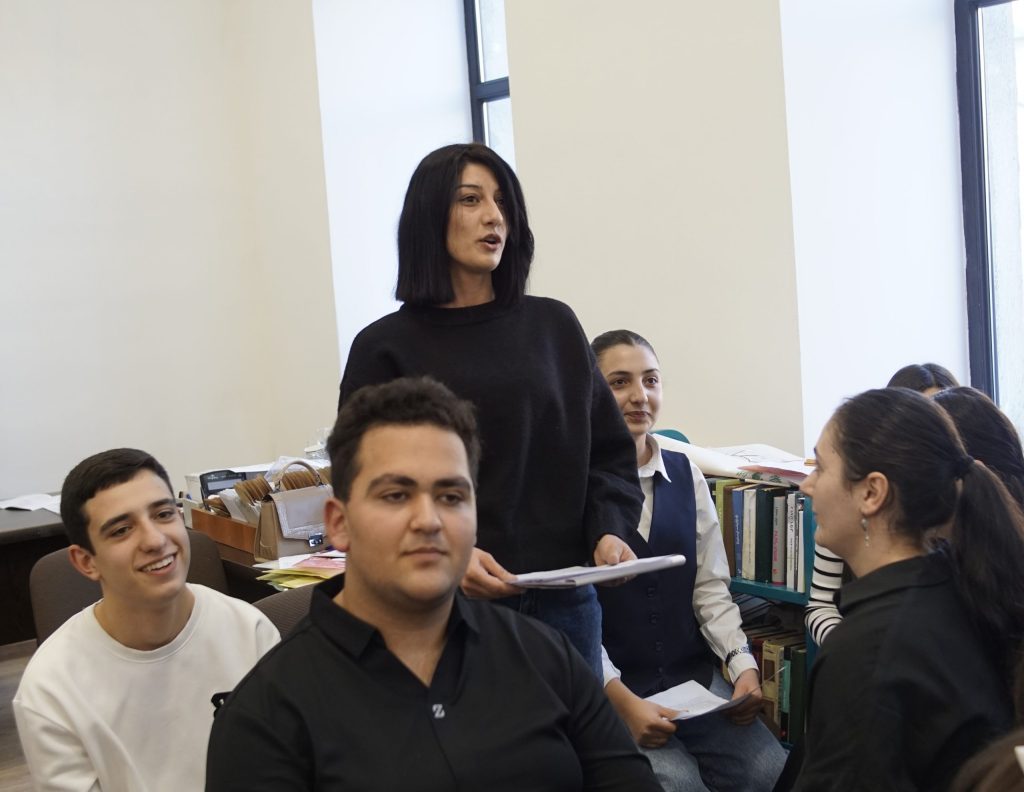
For many young people, life in a small Armenian village can feel quietly stale. Jobs are scarce and often seasonal, and many families rely on relatives working abroad. This makes young people focus more on everyday survival rather than on personal ambitions. With limited training opportunities and spaces for participation − combined with a ‘nothing-will-change’ belief − it is easy for a sense of resignation to take hold. However, for many young villagers in Gegharkunik region, things are now going differently. With EU support, the Azhdahak Environmental Centre, a local NGO based in the village of Gegharkunik, is mobilising young people through volunteer initiatives that spark real community change.

Clay jugs, wooden sieves, a woven carpet − each of these old household objects carries a story.  Rescued from attics, family kitchens and donated by elderly villagers, they now have a home in a classroom at Gegharkunik Secondary School, teaching younger generations how life was once lived. 

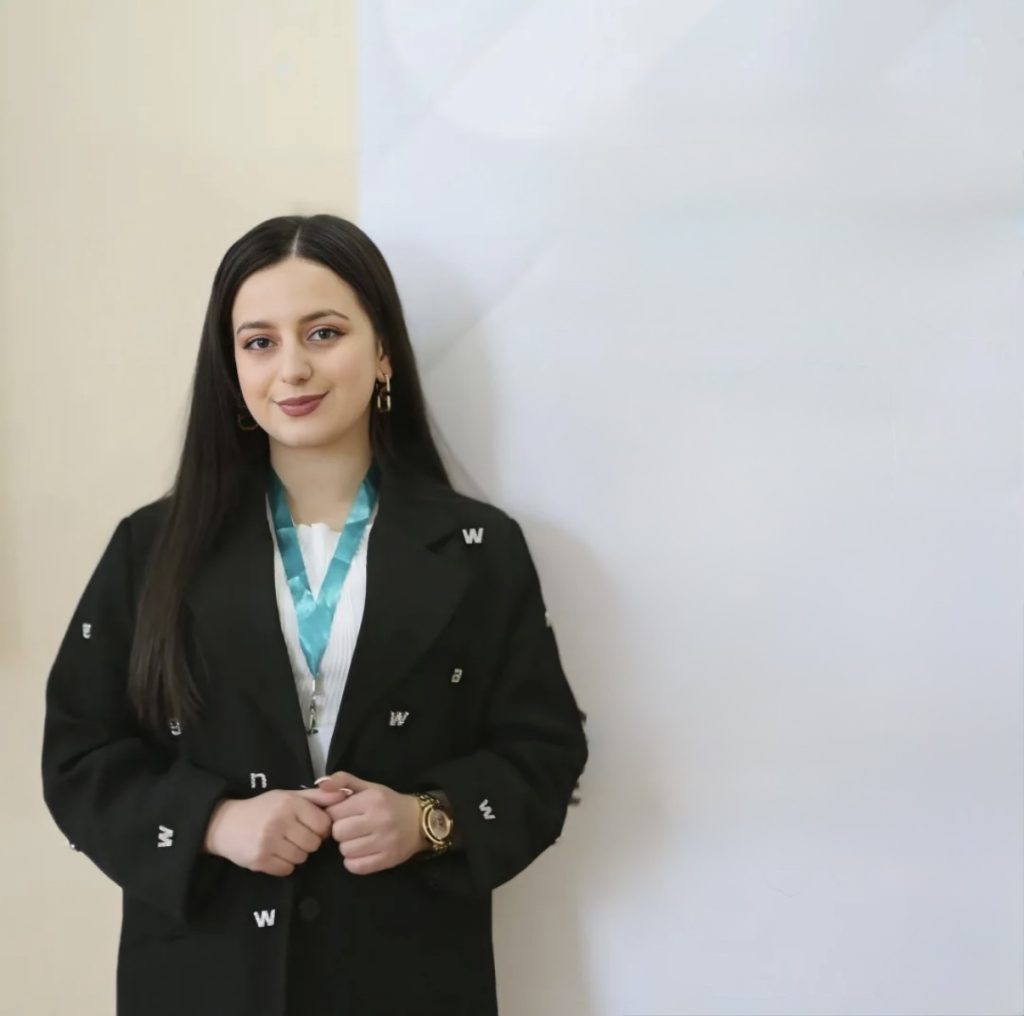
Sofya Avetisyan, a 16-year-old school student, is passionate about traditional antiques. Her idea was quite simple: to collect traditional Armenian household items and create a small exhibition at school. She started in May 2025 with a team of friends, but her initiative soon involved the entire village of Gegharkunik. “The most memorable moment was when people shared stories and memories connected to the objects,” recalls Sofya. “One elderly lady donated an old, worn carpet saying that it had belonged to her grandmother’s mother.

Parents, teachers and neighbours came to see the small museum corner the students had created. The display became more than a collection of objects – it turned into a space where generations met and shared stories.

Around the same time, in the nearby village of Tsaghkashen, another group of students and villagers gathered outside the schoolyard with shovels and seedlings. Led by Vardan Khachatryan, 17, they planted more than a hundred decorative and fruit trees, transforming an empty area into a green learning space. “When we came back to school in September, teachers and students were praising our garden. That experience changed my involvement in community work,” recalls Vardan. 

At first glance, these actions seem small: a school exhibition, a new garden. Yet they are the beginning of something much larger.

The invisible work behind the scenes

Behind these and over 60 other educational, environmental, cultural, social and charitable initiatives stood a network of teachers, mentors and community activists brought together by the Azhdahak Environmental Centre, with support of the EU and the Konrad Adenauer Foundation.

The organisation itself was born from a similar small initiative. Nearly two decades ago, Gegharkunik residents noticed that the river flowing past their village school was filled with waste. “It seemed as if the river was asking for help,” recalls Nellie Drnoyan, the NGO’s head. Students and villagers cleaned the riverbank, transforming the collected metal cans into flowerpots. That single act led to the creation of an eco-club and eventually, the Azhdahak Environmental Centre.

Today, the organisation works with schoolchildren, young people and community activists across Gegharkunik province and twelve surrounding communities. To address the persistent challenge of young people remaining disconnected from community life, the NGO has turned to a simple yet engaging approach: volunteering. “Volunteer work does not require significant financial resources. It allows a team to form quickly and start with small but visible changes,” explains Nellie. 

The first step was the training of mentors – teachers, social activists and community leaders, who would later guide young volunteers. They learned not only the basics of volunteerism and recent legal developments in the field, but also how to recruit, interview and support young volunteers. Rosa Hakobyan, a social studies teacher, stresses: “I was interested in strengthening the connection between the school and the community. Now I use new skills in project planning, communication and teamwork in my professional activities at school to encourage students to become more active.” 

When ideas start to move fast 

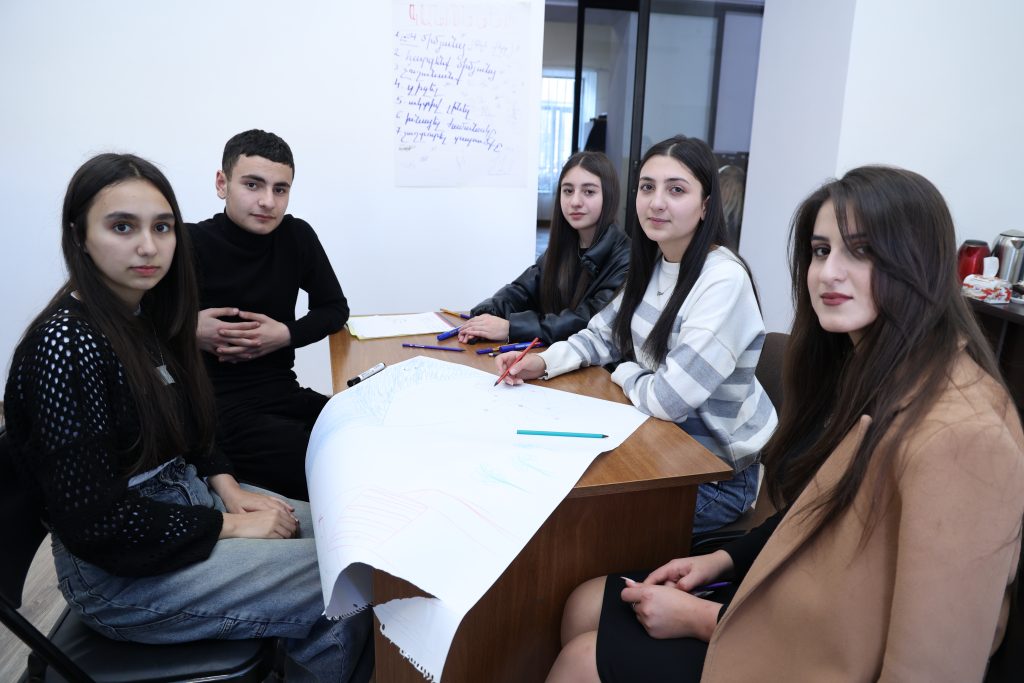
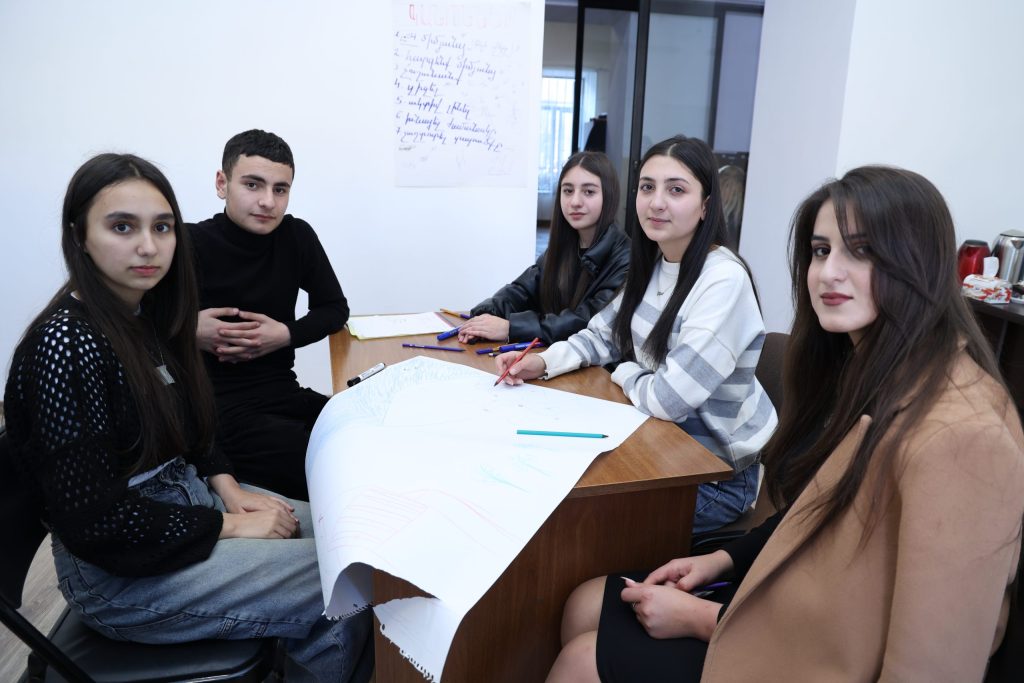
Once the mentors were trained, the momentum shifted to the young people. Sixty volunteers aged 14 to 30, joined the initiative. Under the guidance of 12 mentors, they developed practical skills in community engagement, teamwork and communication, as well as project planning, creative problem-solving and social responsibility. As their confidence grew, the ideas started to surge. Across several villages, young people launched almost 70  initiatives, touching almost every aspect of community life. 

Some focused on education, organising tutoring sessions for younger pupils, helping them with homework, and building interest in learning and reading, through projects like ‘Books as a Driving Force of Education’. Others focused on environmental actions, cleaning riverbanks, planting trees and promoting recycling through initiatives such as ‘Second Life for Waste’. Cultural projects organised traditional dance performances, choir activities and craft workshops, while the ‘Cultural Bridge with a Volunteer from France’ helped discover local sights. Many initiatives addressed social needs, ranging from classroom renovations to awareness campaigns on health, safety and children’s rights.

There was also a remarkable act of solidarity: residents of the Gegharkunik village collected clothes and essential supplies for a large family displaced from Nagorno-Karabakh.

But the real impact lies in the ripple effect of their efforts: the initial 60 volunteers sparked the involvement of over 500 youngsters into meaningful community actions. 

The unexpected reward

Each initiative was documented in short videos and shared online, where they gained recognition through public voting and expert evaluation. Yet for the NGO the best award was the fact that many initiatives have taken root, some becoming community traditions.  

In Gegharkunik, for instance, volunteer Nare Avetisyan and her team turned recycled paper into eco-pens with messages promoting volunteerism. She plans to expand her activity this year. In the same village, Davit Gishchyan’s school flower garden keeps growing, and new planting is already underway. Narek Gasparyan launched peer-to-peer discussions on the dangers of smoking, bringing older and younger students together in conversations that are still ongoing. In Sarukhan, volunteer Rita Danoyan assists elderly residents with the use of payment terminals installed in local shops. A youth centre, established at Sarukhan School No. 1, has plans to organise a summer camp.

Many young people continue volunteering,” says the head of the NGO. “It shows that our activities achieved more than immediate results – they fostered a lasting culture of volunteerism and active citizenship.

What began with a small museum corner in a classroom and newly planted trees in a schoolyard has grown into something much larger: a culture of participation. Residents – once cautious about volunteers’ ideas – gradually became supporterssuggesting ideas, joining events and contributing to community cooperation. Rosa emphasises: “The culture of volunteerism must be encouraged in Armenia. Initiatives like this contribute to empowering young people, fostering responsibility and building stronger connections between individuals and their communities.” And perhaps the most important lesson is that a community change always starts with a small action, carried by people who believe that their efforts matter.

Authors: Volha ProkharavaKristine Hovhannisyan

At the front line of health: Armine’s 35 years of service in Armenia’s Lori region

At the front line of health: Armine’s 35 years of service in Armenia’s Lori region In the quiet village of Dsegh in Armenia, nestled among the green mountains of Lori, lives Armine – a nurse, a confidant and a friend to all. For more than 35 years, she has been a steady presence that people […]

At the front line of health: Armine’s 35 years of service in Armenia’s Lori region

In the quiet village of Dsegh in Armenia, nestled among the green mountains of Lori, lives Armine – a nurse, a confidant and a friend to all. For more than 35 years, she has been a steady presence that people in her community turn to, both in sickness and in health.

Born and raised in Dsegh, Armine never left the place that shaped her. Every morning, as the first rays of sunlight touch the mountains, she begins her day with the same purpose she has carried for decades: to protect and nurture the health of her community. “Health is not everything, but without health everything is nothing,” she says with a gentle smile, recalling how, as a little girl, she dreamed of wearing a white gown and holding a patient’s hand.

Her days are filled with planned visits, home calls and friendly conversations. Sometimes, the first call of the day is not about medicine at all. It’s a neighbour who needs to talk, share a worry or celebrate a small joy. Armine listens, always. For her, being a nurse is more than a job – it’s about being a bridge of trust between people and the health system.

A first line of defence

There are painful memories, too, moments when, despite best efforts, a life could not be saved. But there are also triumphs – a patient revived from unconsciousness, a newborn who took their first breath after a tense struggle. Those moments, she says, are the heart of her work.

Armine serves 7 villages which are home to around 770 people, spanning 3 generations. She knows them all by name, knows their stories and their lives. Each home visit is not just about providing medical attention, but also compassion and empathy. “The love of my patients and my optimism give me strength,” she reflects.

When she feels tired, she retreats to her flower garden, where she regains her peace before returning once again to care for others. Armine believes deeply in the power of primary health care – the first line of defence for every community. Timely vaccinations, preventive care and immediate response, in her view, often mean the difference between life and death. Armine’s dedication to her profession keeps her community healthy, hopeful and strong.

Quality, affordable care for everyone

Armine and nurses like her are the vital first link between people and health systems and the backbone of universal health coverage (UHC), ensuring access, promoting prevention, reducing inequalities, empowering communities and strengthening primary care.

To strengthen that first link, the Ministry of Health of Armenia and WHO, alongside the European Union (EU), are working together to build a more robust foundation for primary health care – the cornerstone of UHC and a healthier Armenia.

This collaboration is part of the EU-funded project “Health Resilience in the Eastern Partnership,” a multiyear collaboration with the European Commission’s Directorate-General for Enlargement and the Eastern Neighbourhood to promote health system resilience in the 5 countries in the Eastern Partnership, including Armenia.

The programme lays the foundations for quality, affordable care for everyone everywhere in Armenia through a review of regulations and licensing of health workforce, leadership training for policy-makers, health labour market analysis, workforce forecast and planning, as well as a review of workforce migration and retention policies.

“Being a nurse is more than a job”

“Being a nurse is more than a job” “The profession of a nurse is not just a job, it’s a calling,” says Gohar, a dedicated nurse who has cared for her community in rural Armenia for many years. To her patients, she is not only a health-care professional – she is also a friend and […]

“Being a nurse is more than a job”

“The profession of a nurse is not just a job, it’s a calling,” says Gohar, a dedicated nurse who has cared for her community in rural Armenia for many years. To her patients, she is not only a health-care professional – she is also a friend and a confidant.

“I chose to become a nurse because I had always wanted to help people and ease their pain,” Gohar shares with a gentle smile. “This work takes more than skill. It takes patience, care and a great love for people.”

Gohar serves 3 villages with a combined population of about 4400. In these rural communities, nurses like her look after thousands of lives, stories and destinies. Together, they are the lifeblood of local health care.

Her day starts early, often before sunrise, with phone calls and visits from patients. Some seek medical advice, others simply need reassurance. “Sometimes,” she says softly, “people just want to be heard and understood.”

Gohar believes that primary health care is the first and most important link in the health-care system – a bridge between the community and the wider health network. “Everything begins with that first connection,” she explains.

“A caring approach prevents complications and builds trust. When the first link is strong, the whole community becomes healthier and more resilient.”

Making connections

To strengthen that first link, the Ministry of Health of Armenia and WHO, alongside the European Union (EU), are working together to build a more robust foundation for primary health care – the cornerstone of universal health coverage and a healthier Armenia.

This collaboration is part of the EU-funded project “Health Resilience in the Eastern Partnership,” a multiyear collaboration with the European Commission’s Directorate-General for Enlargement and the Eastern Neighbourhood to promote health system resilience in the 5 countries in the Eastern Partnership, including Armenia.

The project lays the foundations for quality, affordable care for everyone everywhere in Armenia through a review of regulations and licensing of health workforce, leadership training for policy-makers, health labour market analysis, workforce forecast and planning, as well as a review of workforce migration and retention policies.

First ever EU-Armenia summit to take place on 4 and 5 May 2026

he President of the European Council, António Costa, together with the President of the European Commission, Ursula von der Leyen, will represent the EU at the EU-Armenia summit taking place in Yerevan on 4 and 5 May 2026. Prime Minister Nikol Pashinyan will represent Armenia. Ahead of the summit, President Costa and President von der […]

he President of the European Council, António Costa, together with the President of the European Commission, Ursula von der Leyen, will represent the EU at the EU-Armenia summit taking place in Yerevan on 4 and 5 May 2026. Prime Minister Nikol Pashinyan will represent Armenia.

Ahead of the summit, President Costa and President von der Leyen will attend the European Political Community meeting, taking place in Yerevan on 4 May 2026.

The EU-Armenia summit will focus on strengthening bilateral relations in particular connectivity in energy, transport and digital. Leaders will also discuss the progress related to ensuring peace, security, connectivity and prosperity in the South Caucasus, as well as current global challenges, including the latest developments in the Middle East and Ukraine.

Armenia is a close EU partner, and we look forward to deepening this relationship with our first-ever summit. United by shared values and a commitment to international law and the rules-based international order, this milestone will mark an important investment in peace, security, connectivity and prosperity in the South Caucasus.

António Costa, President of the European Council

The EU-Armenia Summit reflects the increasing dynamism of the bilateral partnership over the past years. EU relations with Armenia are based on the EU-Armenia Comprehensive and Enhanced Partnership Agreement (CEPA), in force since 2021, and the Strategic Agenda for the EU-Armenia Partnership, agreed in 2025. The EU is a key partner for Armenia’s reform agenda and for trade and investments. It is also the country’s largest donor. In its conclusions of October 2023, the European Council tasked EU institutions to “strengthen EU-Armenia relations in all their dimensions”.

Background

Through the CEPA agreement, Armenia has committed to pursuing a comprehensive reform agenda based on democracy, transparency and the rule of law – in particular the fight against corruption, reforming the judiciary and enhancing its accountability to citizens, and ensuring equal economic, employment and social opportunities for all.

In September 2024, the EU launched a visa liberalisation dialogue with Armenia to support Armenia in its goal of achieving a visa-free travel regime with the EU. 

On 14 July 2025, European Council President António Costa and European Commission President Ursula von der Leyen met with Armenian Prime Minister Nikol Pashinyan to reaffirm and advance the growing partnership between the European Union and Armenia. 

In August 2025, the EU welcomed the initialling of the Armenia-Azerbaijan peace treaty and the signing of a political declaration. This agreement between Armenia and Azerbaijan marks a significant breakthrough to end decades of conflict. The EU stands ready to help develop inclusive regional connectivity through investments and the full opening of communications in the region, in support of sustainable peace and stability.

  • EU relations with Armenia (background information) 
  • Eastern Partnership (background information) 

NEW Call for Expression of Interest – Establishment of a Pool of Experts on EU environmental acquis (Armenia, Moldova, Ukraine)

NO CLOSING DATE: more info below The open Call for Expression of Interest (EoI) is being launched by the Environmental Agency Austria (UBA), one of the partners of the EU4Green Recovery East (EU4GRE) programme (2025-2028). The call aims to establish a Pool of national and international experts to support Ukraine, Moldova and Armenia in their […]

NO CLOSING DATE: more info below

The open Call for Expression of Interest (EoI) is being launched by the Environmental Agency Austria (UBA), one of the partners of the EU4Green Recovery East (EU4GRE) programme (2025-2028).

The call aims to establish a Pool of national and international experts to support Ukraine, Moldova and Armenia in their alignment with the EU environmental acquis under Chapter 27.

The Pool of Experts will provide flexible, short-term, on-demand expertise throughout the Programme implementation period, supporting in particular:

  • Legal screening, gap analysis and legislative drafting
  • Development of DSIPs, roadmaps and implementation plans
  • Feasibility studies (legal, institutional, technical and financial).
  • Enforcement, compliance, monitoring and reporting systems.
  • Capacity building, training and stakeholder coordination

Call specifications:

  • Terms of references – Call for Expression of Interest: Establishment of a pool of experts to support alignment process with chapter 27 (environmental acquis) in Ukraine, Moldova and Armenia
  • Annex 1 – Declaration of honour
  • Annex 2 – Self declaration
  • Annex 3 – Expert information and categorisation form
  • Application deadline: the Call is open on a rolling basis throughout the Programme duration, with periodic evaluation rounds. First evaluation round will be conducted after the period of March 15th 2026. 
  • Experts are encouraged to submit their Expressions of Interest as early as possible, especially in view of activities planned for 2026.
  • Inclusion in the Pool of Experts does not constitute a commitment by the Contracting Authority to award a contract.

‘I now see myself as an active citizen’: Young eco-leaders driving change in rural Armenia

‘I now see myself as an active citizen’: Young eco-leaders driving change in rural Armenia Are you young and eager to lead eco-change in your small community, but unsure where to begin? You’re not alone. Anna, Lusine and twenty young people from villages in Aragatsotn region of Armenia shared a common ambition: to make their […]

‘I now see myself as an active citizen’: Young eco-leaders driving change in rural Armenia

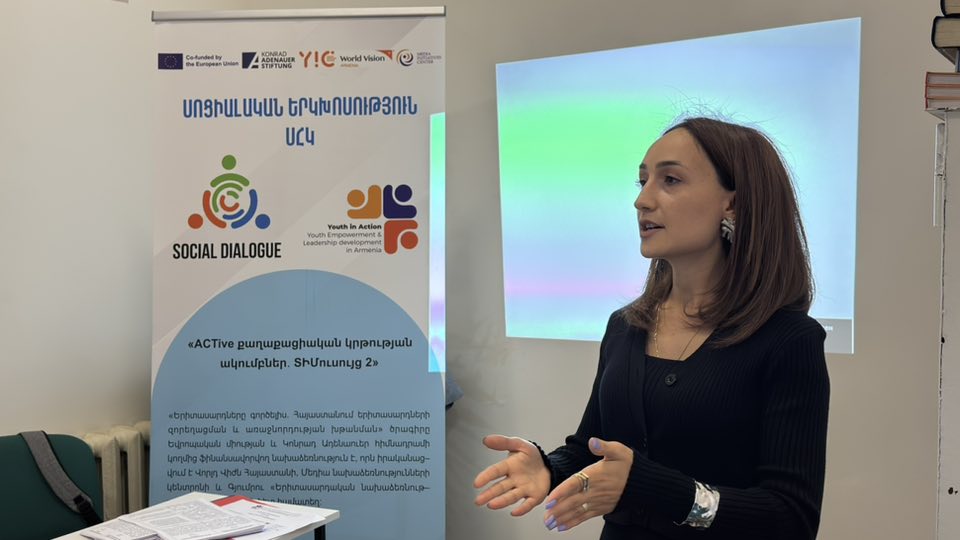
Are you young and eager to lead eco-change in your small community, but unsure where to begin? You’re not alone. Anna, Lusine and twenty young people from villages in Aragatsotn region of Armenia shared a common ambition: to make their communities a better place to live − whether by tackling illegal dumping, championing recycling among peers or organizing local clean-ups. Thanks to guidance from ‘Uniting Bridge’ Social NGO, a local organization supported by the European Union and Konrad-Adenauer-Stiftung, their ideas are now turning into real action. The organization equips rural youth with practical skills and participatory tools, giving them a voice in local decision-making and transforming ambition into tangible change.

In rural communities across Aragatsotn region of Armenia, young people are often the first to point to daily environmental problems: poorly managed waste, informal dumping sites on village outskirts, limited recycling or water contamination. Many note the absence of green public spaces, a gap between environmental regulations and their practical application. Yet their concerns rarely translate into action. 

Young people often don’t understand how environmental decisions are made at the municipal level or how they can formally engage local authorities. Meanwhile, institutions lack youth-centered approaches to ensure participation is systematic rather than occasional,” – explains Evelina Arakelyan, Vice President of ‘Uniting Bridge’ Social NGO. Geographical isolation and a shortage of youth leadership role models exacerbate the issue. “Many young people are eager to participate in community life, but they lack practical skills, confidence and accessible tools to do so”, − she adds.

From concerns to competencies

Since 2014, Uniting Bridge − first as a grassroots youth initiative and since 2019 as a youth NGO − has spent more than a decade to create civic, educational and leadership opportunities for young people living beyond the capital of Armenia. Based in Oshakan village of the Ashtarak enlarged community, the NGO works with surrounding rural settlements, engaging local youth, schools and municipal authorities. 

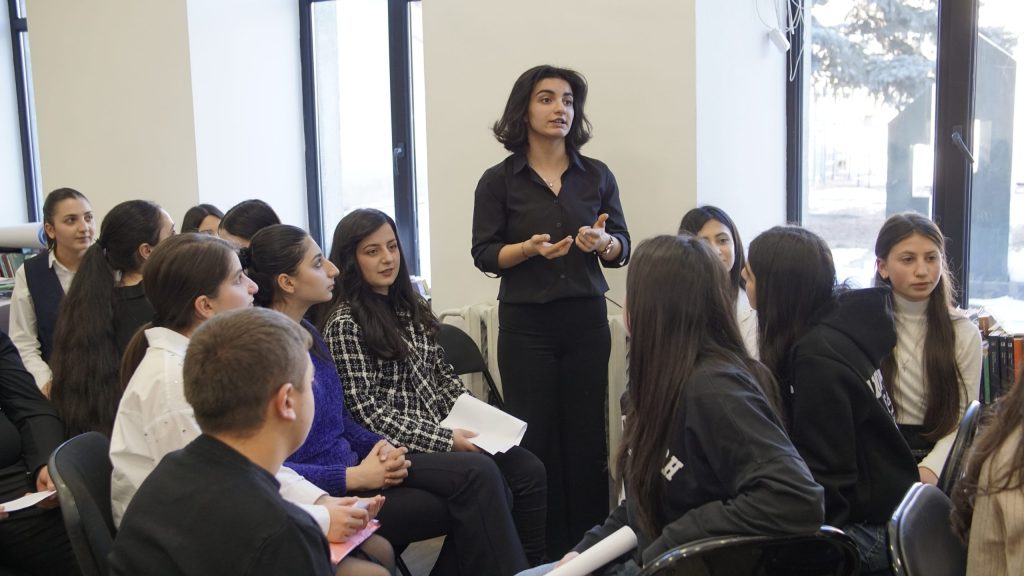
Their initiative CreARTive School for Rural Youth Eco-Leadership, co-funded by the EU and the Konrad-Adenauer-Stiftung,  addresses the identified gap. Rather than a one-off training, it offers a structured learning model combining civic education, environmental governance and creative advocacy. 20 young people, strongly interested in environmental issues and community engagement, joined the CreARTive School in 2026 to learn more about environmental self-governance and decision-making, citizen participation and eco-activism.

Our sessions blended theory with young people’s own experiences of living in rural communities”, – says Razmik Mnatsakanyan, the NGO’s head. Indeed, one of the participants’ most memorable moments was a simulation of a municipal council meeting, where they debated budget priorities and environmental measures affecting their own villages. For many, it was the first time local governance felt tangible.

Discussions on civic activism often began with skepticism: “If we raise an issue, will anything actually change?”. When trainers introduced strategic advocacy tools, stakeholder mapping and community engagement methods, the conversations shifted from doubt and mistrust to problem-solving thinking. 

Perhaps the most profound transformation happened during sessions on eco-leadership and personal responsibility. Through guided reflections, participants moved from seeing environmental protection as solely the government’s responsibility to recognizing their own capacity to influence behaviors, raise awareness and initiate small-scale change. 

When learning meets practice

Training did not remain theoretical. New knowledge was shortly translated into concrete advocacy products – short eco-storytelling videos and an interactive board game. The videos focus on real issues in Ashtarak, Talin and Aparan enlarged communities – from improper waste management to recycling and responsible consumption, highlighting practical eco-solutions for peers. The board game, designed around real-life scenarios from community life, challenges players to make sustainable decisions and community-level solutions. 

Designing an educational eco-game was especially inspiring,  shares Anna Aleksanyan (21), a trainee from Ohanavan village, – “It transformed our learning into a practical tool that sparks awareness and real conversations about protecting the environment.” 

Outside the classroom, participants become Green Ambassadors, organizing and leading eco-advocacy initiatives across rural settlements in Aragatsotn. They run sessions in schools, youth centers and community spaces, presenting eco-storytelling videos, facilitating the board game and leading discussions on waste management, pollution and responsible consumption. “These initiatives build confidence and leadership, transforming trainees into active facilitators and advocates”, – emphasizes Razmik Mnatsakanyan.

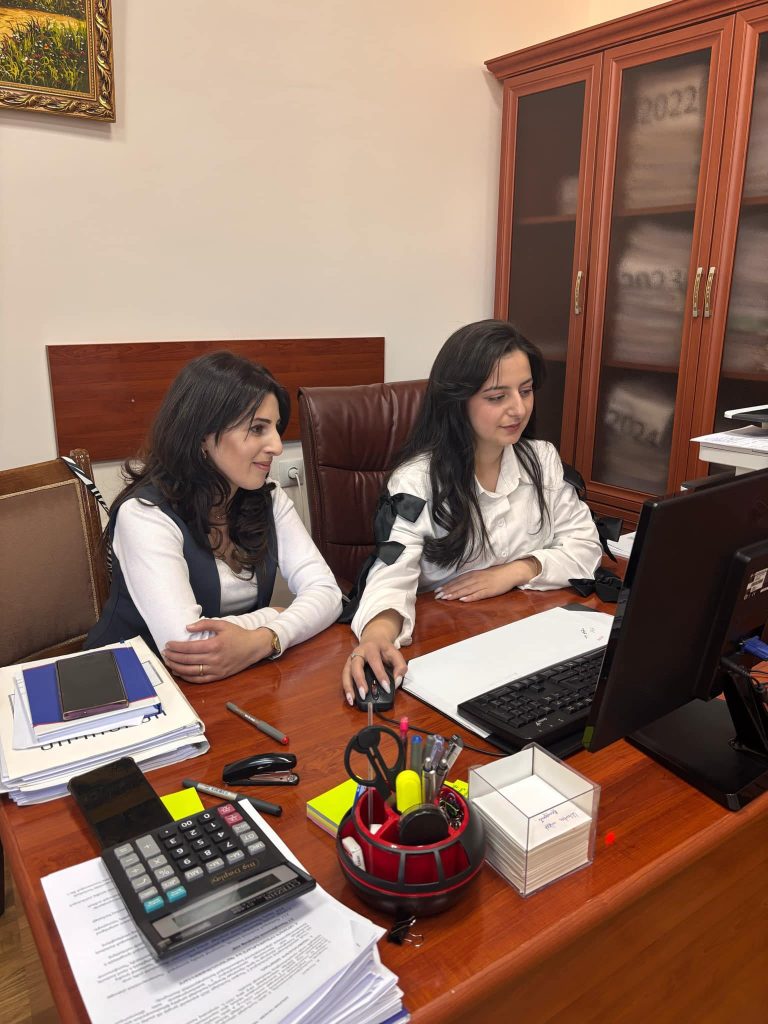
Bridging learning, skills and real governance, five most active trainees continued with internships at the Municipality of Ashtarak. There, they observed how municipal departments operate, how decisions are prepared and implemented and how issues – such as waste management and community planning – are handled in reality. Lusine Manukyan (21) shares: “I learned to analyze community resources and how they can be distributed and managed effectively. This experience gave me valuable professional exposure.”

A lasting shift

Probably the most significant achievement has been the mindset change, when youth moved from passive concern to proactive action,” – underlines NGO’s head. – “Youth now approach environmental challenges with initiative and ownership, not waiting for adults or institutions to act”. This is very true for Lusine, who – inspired by the NGO’s activities – started her own tree-planting initiative in Bazmaghbyur village, which has become a joyful spring tradition involving friends, students, and local residents. “I now see myself as an active citizen who can contribute to positive change”, – says the girl. 

Sustainability is embedded into the CreARTive School model. Its curriculum, training modules and board game are replicable for other rural communities. Meanwhile, the Green Ambassadors network ensures that youth-led eco-actions continue independently.

Uniting Bridge is one of hundreds of civil society organizations across Armenia working to empower young citizens. Through initiatives such as EU4Youth or Youth in Action, the EU’s youth policy supports their efforts – strengthening organizations’ work, developing professional skills in the regions and encouraging civil society participation in youth policymaking – in line with Armenia’s recent legal reforms on youth development. If you’re ready to drive change, they can help make it happen.

Authors: Volha Prokharava, Kristine Hovhannisyan

Armenia advances its energy resilience with additional €135 million in European Commission and the German Government support

On March 19, in the presence of Armenian government representatives, German Ambassador Busch, Commissioner Kos, and representatives from KfW and European Investment Bank, two new financing agreements worth €135 million were signed by Armenian Minister of Finance Hovhannisyan, and KfW Director Garcia Del Arco for the financing of the Caucasus Transmission Network project. The agreements include a €120 million loan provided by KfW with risk cover from […]

On March 19, in the presence of Armenian government representatives, German Ambassador Busch, Commissioner Kos, and representatives from KfW and European Investment Bank, two new financing agreements worth €135 million were signed by Armenian Minister of Finance Hovhannisyan, and KfW Director Garcia Del Arco for the financing of the Caucasus Transmission Network project.

The agreements include a €120 million loan provided by KfW with risk cover from the German Federal Government, alongside a €15 million grant from the EU Neighbourhood Investment Platform. These new commitments complement previous grant and loan financing provided on behalf of the German Government and the European Commission, bringing total support to € 313.2 million. The EIB is also co-financing the project with currently €10 million.

Regarding the significance of these agreements, the Minister of Finance of the Republic of Armenia stated:

“Today’s signing of the Loan and Grant Agreements represents an important milestone in the implementation of the Caucasus Transmission Network Project and in strengthening regional energy cooperation. This Project will contribute to a more reliable, efficient, and interconnected power system in the region, enhancing cross-border electricity exchange and improving energy security. We highly value this cooperation with KfW, the Government of Germany, and the European Union, and are confident that the successful implementation of this project will further strengthen regional connectivity and contribute to the sustainable development of the South Caucasus.”

The committed resources, aimed at strengthening Armenia’s energy security and independence, will expand renewable energy generation across the country and enhance the regional integration of Armenia’s power market through the Caucasus Transmission Network. The project will enable reliable, flexible, and mutually beneficial cross-border energy exchange across the South Caucasus. Moreover, Armenia will gain access to the European grid.

“One of the key pillars of our bilateral cooperation is to support Armenia’s regional integration and the development of Armenia’s energy sector. We want to contribute to its resilience, efficiency and sustainability by increasing grid stability and by developing renewable energy. Both Chancellor Merz and Prime Minister Pashinyan have included energy cooperation in the Joint Declaration on the Strategic Agenda between Germany and Armenia which they signed in December last year” stated Claudia Busch, German Ambassador to Armenia.

“With this investment, we are putting our money where our mouth is and proving to Armenia that we’re serious about its energy resilience. The Caucasus Transmission Network is a priority investment, enhancing regional integration of the power market while strengthening Armenia’s energy security and independence. These connections are more than just infrastructure; they are a pathway to greater renewable energy solutions and diversified partnerships with neighbouring countries,” said EU Commissioner Marta Kos.

This increased financial allocation demonstrates that cross-regional connectivity remains a shared strategic priority.

Commissioner Kos visits Armenia to reinforce the EU’s partnership with Armenia

On Thursday and Friday, Commissioner for Enlargement, Marta Kos is in Armenia to further reinforce cooperation between the EU and Armenia, and advance regional connectivity. On Thursday in Yerevan, the Commissioner will meet Prime Minister of Armenia, Nikol Pashinyan. Discussions will focus on the preparation of the upcoming EU-Armenia Summit, as well as strengthening transport, digital, energy […]

On Thursday and Friday, Commissioner for Enlargement, Marta Kos is in Armenia to further reinforce cooperation between the EU and Armenia, and advance regional connectivity.

On Thursday in Yerevan, the Commissioner will meet Prime Minister of Armenia, Nikol Pashinyan. Discussions will focus on the preparation of the upcoming EU-Armenia Summit, as well as strengthening transport, digital, energy and trade links, in line with the EU Connectivity Agenda. They will also exchange on the regional situation as well as the democratic resilience of Armenia. Commissioner Kos will also meet Deputy Prime Minister of Armenia, Mher Grigoryan to review progress on the EU’s €270 million Resilience and Growth Plan for Armenia. A joint press statements will follow their meeting and will be transmitted live on EBS+ at +/- 16:30 CEST. 

On Friday in Gyumri, Commissioner Kos will visit EU-funded enterprises supporting social inclusion, local economic growth and job creation. In 2024 alone, EU programmes supported more than 7,000 Armenian businesses, creating more than 20,000 jobs. The Commissioner will also visit Gyumri’s historic marketplace, currently under EU-funded restoration, as well as an innovation hub promoting youth skills in technology and design. Commissioner Kos will deliver a speech at Shirak State University. She is then set to meet with Young European Ambassadors, as well as with the local civil society representatives and journalists involved in EU-funded projects to exchange views on their work and discuss their role in in safeguarding Armenia’s democratic resilience.

Audiovisual material of the visit will be available on EBS.

The European Union launches the 2026 Call for Proposals for Civil Society Organisations: Strengthening Civil Society for Inclusive and Resilient Communities (EuropeAid/186051/DD/ACT/AM)

The European Union has launched the 2026 Call for Proposals for Civil Society Organisations (CSOs), entitled: “Strengthening Civil Society for Inclusive and Resilient Communities” The Call aims to strengthen inclusive, rights-based, and sustainable social and regional development in Armenia. The 2026 Call for Proposals is structured around four thematic Lots:Lot 1 – Community-Based Social Services – 3 000 000 […]

The European Union has launched the 2026 Call for Proposals for Civil Society Organisations (CSOs), entitled: “Strengthening Civil Society for Inclusive and Resilient Communities”

The Call aims to strengthen inclusive, rights-based, and sustainable social and regional development in Armenia.

The 2026 Call for Proposals is structured around four thematic Lots:
Lot 1 – Community-Based Social Services – 3 000 000 EUR
Lot 2 – Rights and Socio-Economic Inclusion of Persons with Disabilities – 3 000 000 EUR
Lot 3 – Youth- and Women-led Local Sustainable Development – 2 000 000 EUR
Lot 4 – Sustainable Integration, Protection Services and Reforms under the Visa Liberalisation Dialogue (VLD) – 1 600 000 EUR

Who Can Apply
The Call is open to legally established civil society organisations that meet the eligibility criteria defined in the Guidelines for Applicants.

How to Apply
Applications must be submitted online via the EU Funding & Tenders Portal.

The deadline for submission of Concept Notes is 20 April 2026 at 12:00 Brussels time.
All relevant documents, including the Guidelines for Applicants and application templates, are available on the Portal.

Information Session
An information session will be organised to provide guidance on the Call and submission process.

📅 Date: 18 March 2026
📍 Format: Online
📩 To register, please send an email by 16 March 2026 to DELEGATION-ARMENIA-CALLS-FOR-PROPOSAL@eeas.europa.eu, indicating: name, surname, nationality and email address of the persons who are going to participate as well as their organisation and position. Once you have registered successfully for the information session, the link will be shared the day before the session takes place.