Building Armenia’s capacity for air pollutant emissions reporting with EU and UNECE support

Reliable emissions data are essential for effective policies to reduce air pollution and greenhouse gas (GHG) emissions. Although air pollutant and GHG emission inventories are often developed separately, they rely largely on the same underlying activity data. Developing them through a coordinated and harmonized system can improve efficiency, reduce costs, enhance data quality and consistency, and help policymakers better understand the synergies and potential trade-offs between air pollution control and climate action.
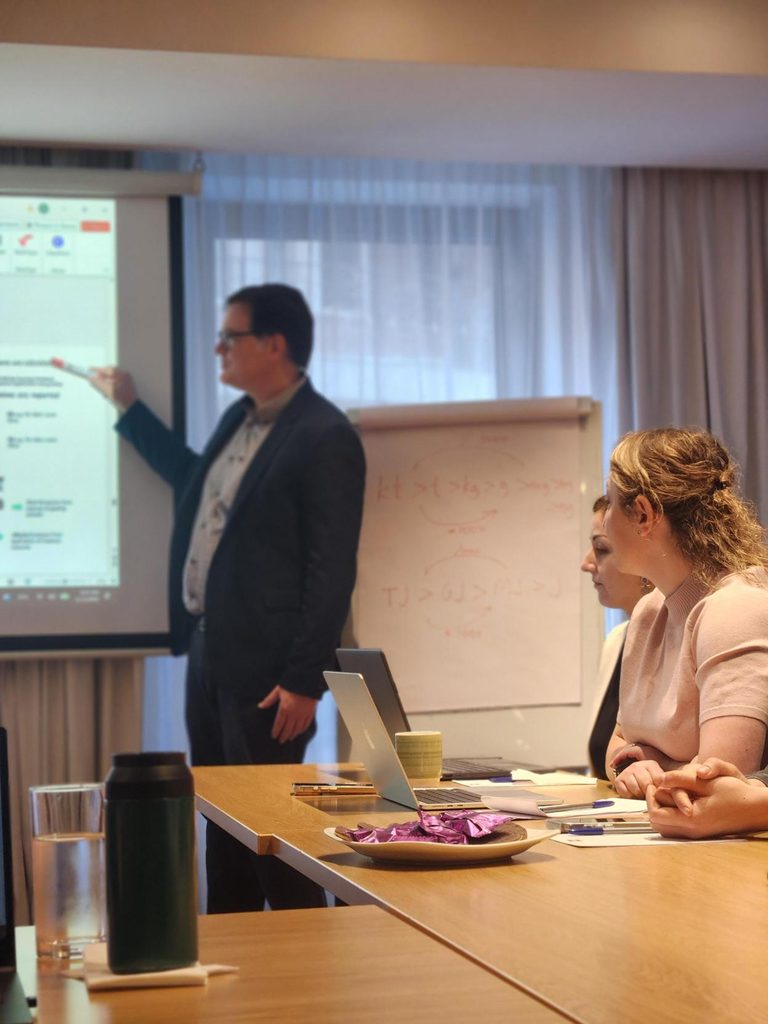
As part of the EU-funded EU4Clean Air in Armenia project, the United Nations Economic Commission for Europe (UNECE) organized a four-day national training workshop on emission inventories in Yerevan (3–6 November 2026). The workshop brought together national experts involved in emissions inventory-related work under the UNECE Convention on Long-range Transboundary Air Pollution (Air Convention) and United Nations Framework Convention on Climate Change (UNFCCC).
The training focused on strengthening national capacities for air pollutant emission estimation and reporting. It combined technical presentations with practical exercises covering key emission source sectors, including energy, transport, industry, agriculture and waste. Participants worked with national activity data, emission calculation methodologies and reporting templates, gaining hands-on experience in identifying key emission categories, assessing uncertainties and preparing Informative Inventory Reports (IIR).
The workshop also addressed the reporting requirements and methodologies under the Air Convention, including the preparation of National Emission Reporting (NFR) tables and the relevant reporting annexes. Particular attention was given to data collection, the use of emission calculation tools, inventory quality and the preparation and updating of national inventory reports.
While focusing on strengthening the national air pollutant inventory under the Air Convention, the workshop contributed to the broader objective of establishing a harmonized system for air pollutant and GHG emission inventories in Armenia. Better coordination in developing the two inventories, which rely largely on overlapping activity data, can reduce duplication of efforts, improve data quality and consistency, and provide decision-makers with a more comprehensive basis for assessing the impacts of air pollution and climate measures.
Armenia has been a Party to the Air Convention since 1997 and continues to advance its implementation. Strengthening national expertise and institutional capacities in emission inventory development is an important step towards improving environmental governance, supporting evidence-based policymaking and advancing the country’s clean air and climate objectives.
The EU4Clean Air in Armenia project is funded by the European Union and implemented by UNDP in partnership with UNECE, the World Health Organization (WHO) and the Environment Agency Austria (UBA).