One conversation can change everything: from Finland to Ukraine, rethinking what young people need – and how to support them

“We have different kinds of crises in our lives – relationships, loneliness, and many other challenges. That is why we try to bring into practice the idea that even a single meeting can be very meaningful,” says Miika Niemelä, Project Manager of the national rollout of walk-in therapy in Finland.
Walk-in therapy is a format where there is no need to wait, book an appointment, or explain how “serious” your situation is – you can simply walk in and talk. The idea is straightforward: sometimes one conversation is enough to shift things. In Finland, the model was introduced in 2021 as a pilot project and has been scaled nationally since 2022. The programme is partly co-funded by the European Union.

The Finnish experience is compelling because it shows that what needs to change is not only services, but the overall approach. Alongside youth workers and activists from Ukraine and other Eastern Partnership countries, TSN.ua joined a study visit under the EU4Youth programme to explore why mental health has become such a visible topic – from Discord communities to youth centres, from working with gaming to single-session interventions.
As it turns out, many of these approaches are already starting to take shape – in a more complex reality – across Eastern Partnership countries. But more on that later.
Chats and Discord: online crisis prevention
In some countries, there is a common scheme based on trying to “lead young people to a specialist”. In Finland, a different question is more often asked: “Where are these young people who need help already? What communication channel would be convenient and anonymous?”
The answer is online consultations. For example, this format is familiar to Ukraine, there are a lot of free and paid services. But the variety of possibilities is what attracts attention.
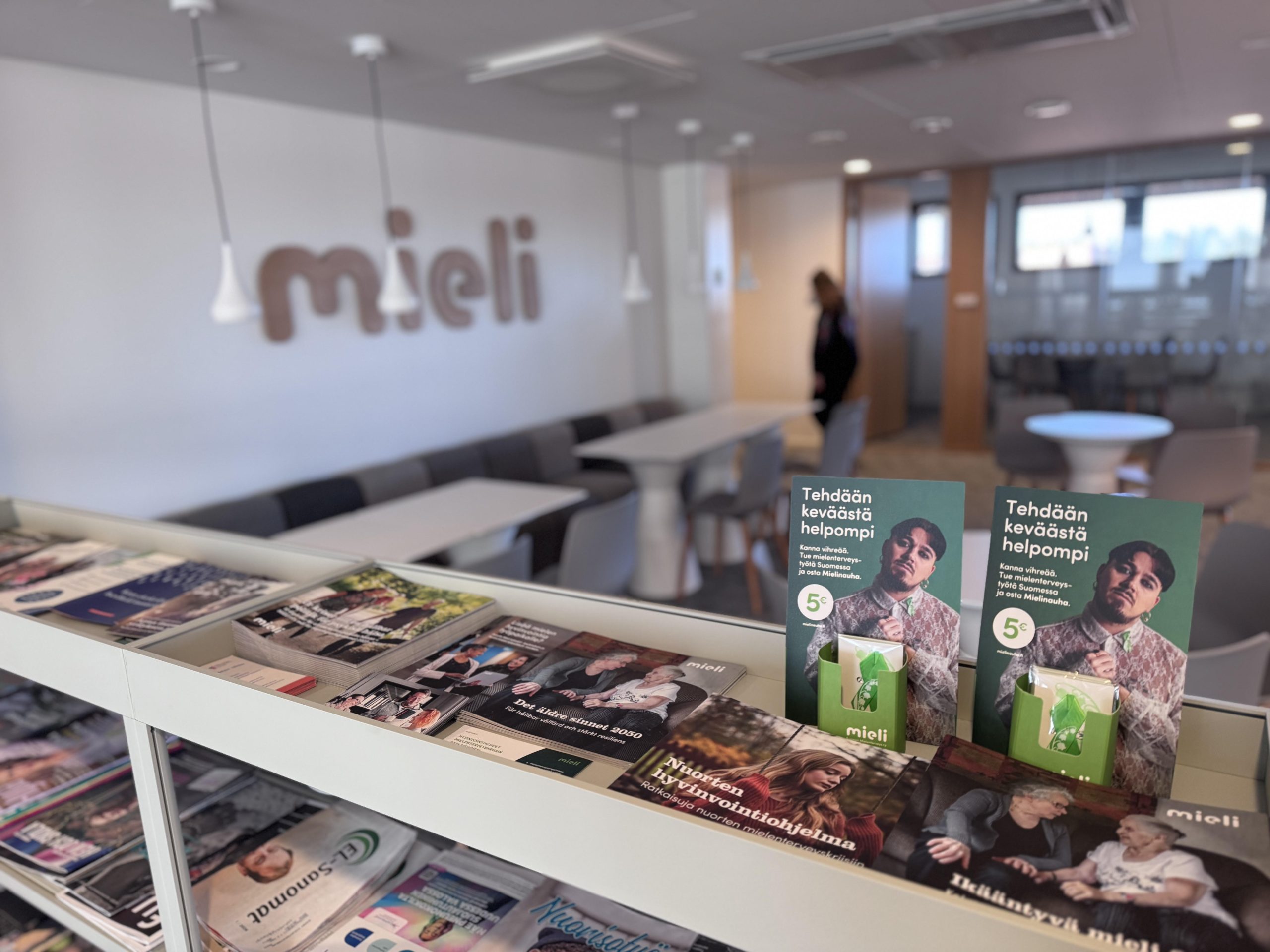
One of the most illustrative examples is the Sekasin platform, which is part of the Sekasin Collective initiative, coordinated by MIELI Mental Health Finland.
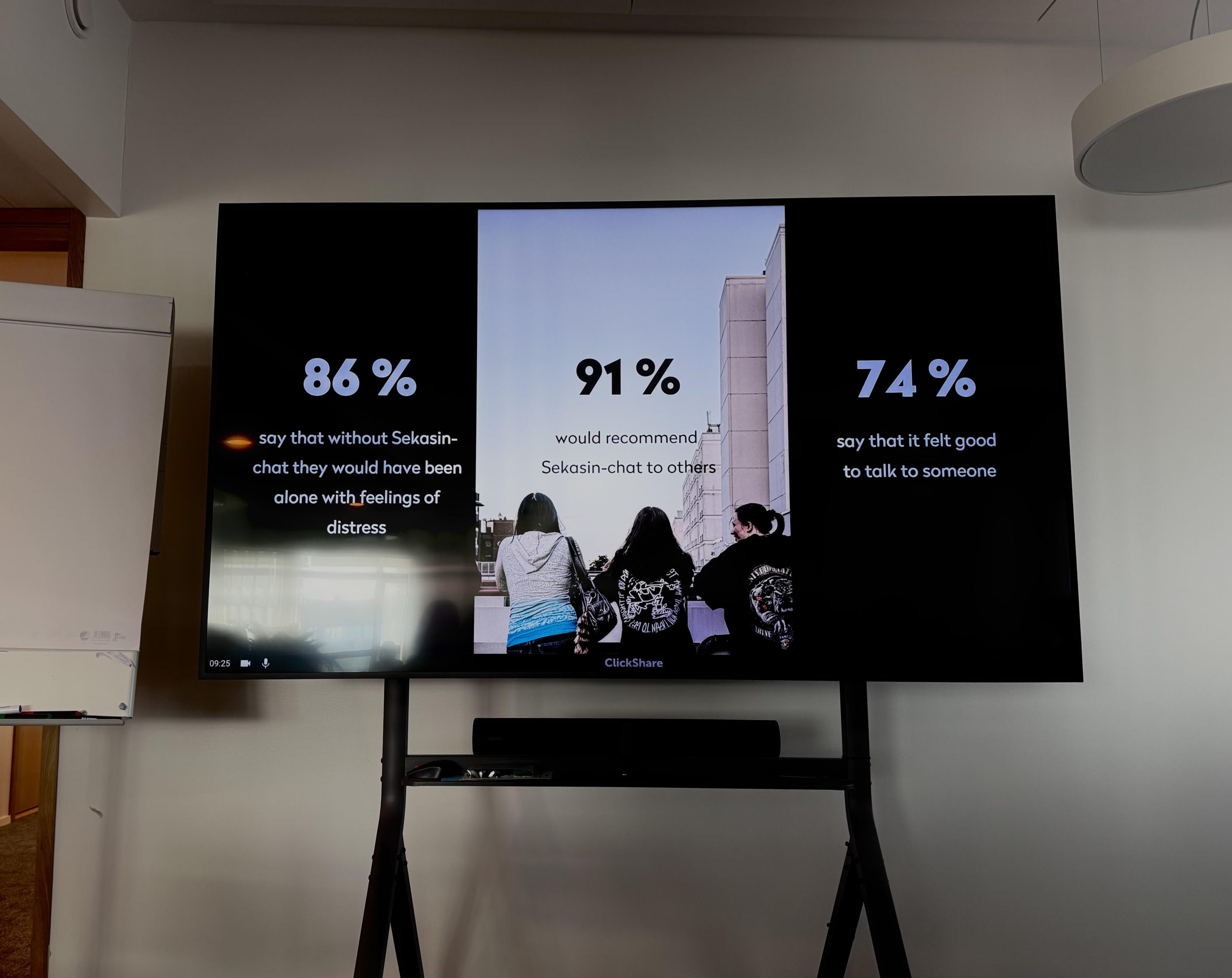
Chat is a national online service for young people aged 12-29: free, anonymous, and without the need for registration or referral. Everything is as simple as possible here: you log in and get put in a queue, after which you are connected to a consultant.
The conversation lasts about 45 minutes and is usually built around very basic things – what is happening, what helps you to hold on, what can be done next. In the last year alone, almost 55,000 conversations took place in the chat.
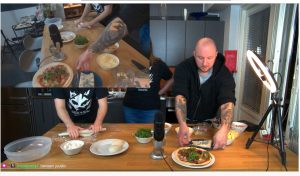
In parallel, there is a gaming community on the Discord messenger. There is always something going on: text channels for various topics, voice rooms of various formats, streams, game sessions, from casual to more competitive. At the same time, participation is as flexible as possible: you can connect from your phone or computer, not turn on the camera or microphone, be active or just observe.
“The main goal is to prevent loneliness and promote the importance of dialogue. It is the largest nationwide online youth community in Finland, with over 20,000 members, active since 2018. The platform is open 24/7, although moderation is not continuous throughout the night,” explains Joosua ‘Zavo’ Valkeakunnas, team leader at Sekasin Gaming.
Various organisations work in the community, which connect to conversations and help to navigate the available services. Participants even voluntarily voted for a cyber police representative to be in the chats. At the same time, they try to create an atmosphere of acceptance. “On many platforms, users are quickly removed for expressing themselves incorrectly, without guidance on how to improve communication. Here, the approach is different: moderators engage with users, especially those using harmful or toxic language, and encourage them to express themselves in more constructive ways,” he explains.
From gaming concerns to gamers’ well-being
The topic of gaming and social media use is often presented in public discourse as a problem. In Finnish practices, this approach looks different.
In the programmes of the Sosped NGO, they work with young people who spend a significant amount of time playing games. But the focus is not on the behaviour itself, but on what lies behind it. “These young people may have certain health problems or difficulties related to gaming, but usually those who come to join our activities are people who fill their entire day with games because they have nothing else to do – no work, no studies, no friends, no sense of community,” explains Helmi Korhonen, head of the digital addictions department.
The solution isn’t to tell them outright that they have a gaming problem. “Instead, the focus is on promoting gamers’ well-being. The idea is that when they find other meaningful aspects in life, such as friends or employment, their gaming naturally decreases, often quite quickly,” she adds.
The programmes the team works with are not limited to conversations. These are various formats. For example, ten-person support groups for gamers, where a specialist and a coach with their own experience work together.
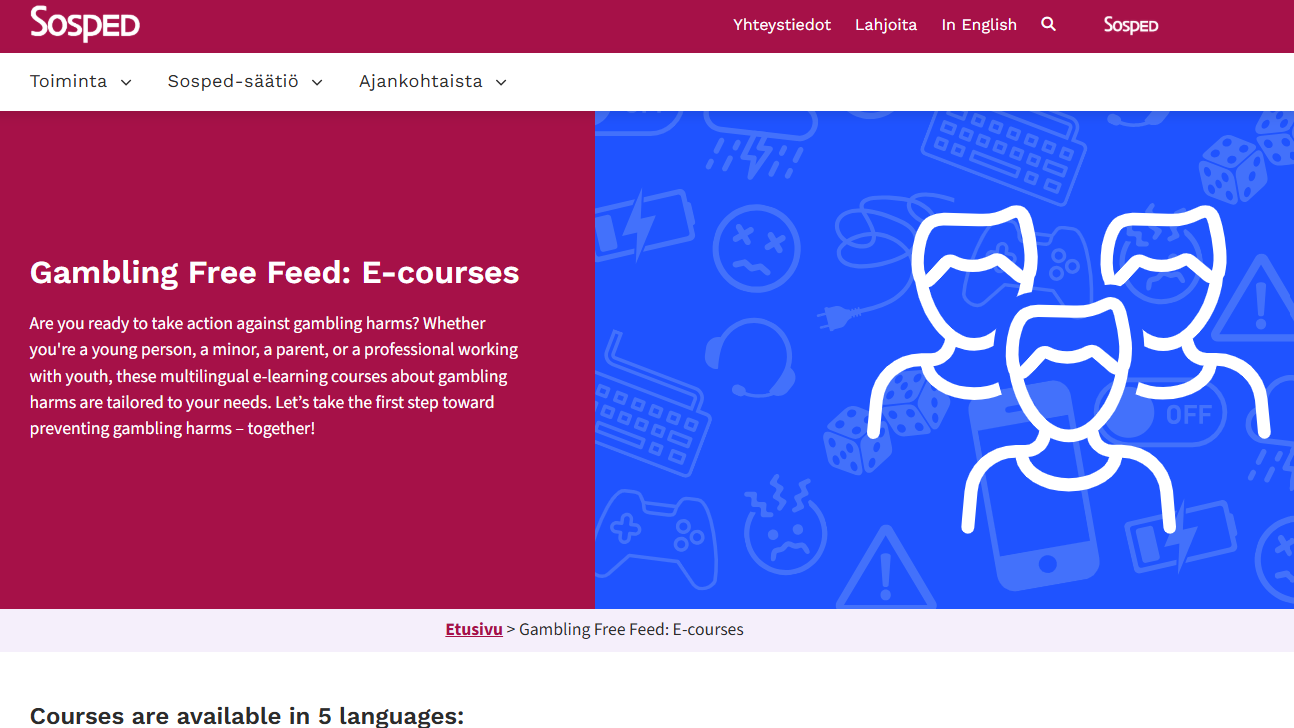
Sosped also works internationally. In particular, it participates in the Gambling Free Feed project, which is implemented with the support of the EU and researches the impact of the digital environment on gambling behaviour.
A separate option is four-day retreats without digital devices. There, participants literally drop out of the usual online environment: minimal technology, shared activities, conversations, a space where they can be without constant connectivity for the first time in a long time.
Acting on warnings is one of the tactics of the organisation. For example, Sosped also deals with the problem of gambling – they offer free online courses and materials that help to recognise such signals as attempts to “win back”, concealing behaviour or financial difficulties. Support is also provided not only for the users themselves, but also for their families.
New support formats: podcast and VR
Importantly, solutions do exist – and many of them are notably progressive – as illustrated by the examples of two very different contexts: Ukraine and Azerbaijan.
Psychologist Daryna Aitova is implementing this solution at the SpivDiia charity foundation. The podcast ‘In Touch with a Child’ tries to overcome the stigmatisation of the topic of mental and psychic health. “The podcast helps to involve people in the dialogue primarily because of its flexibility and unobtrusiveness. During its creation, we conducted brainstorming sessions within the team, analysed the needs of parents, and worked with their real requests. Moreover, we directly interviewed parents to determine the topics that resonated with them the most,” said Daryna Aitova.
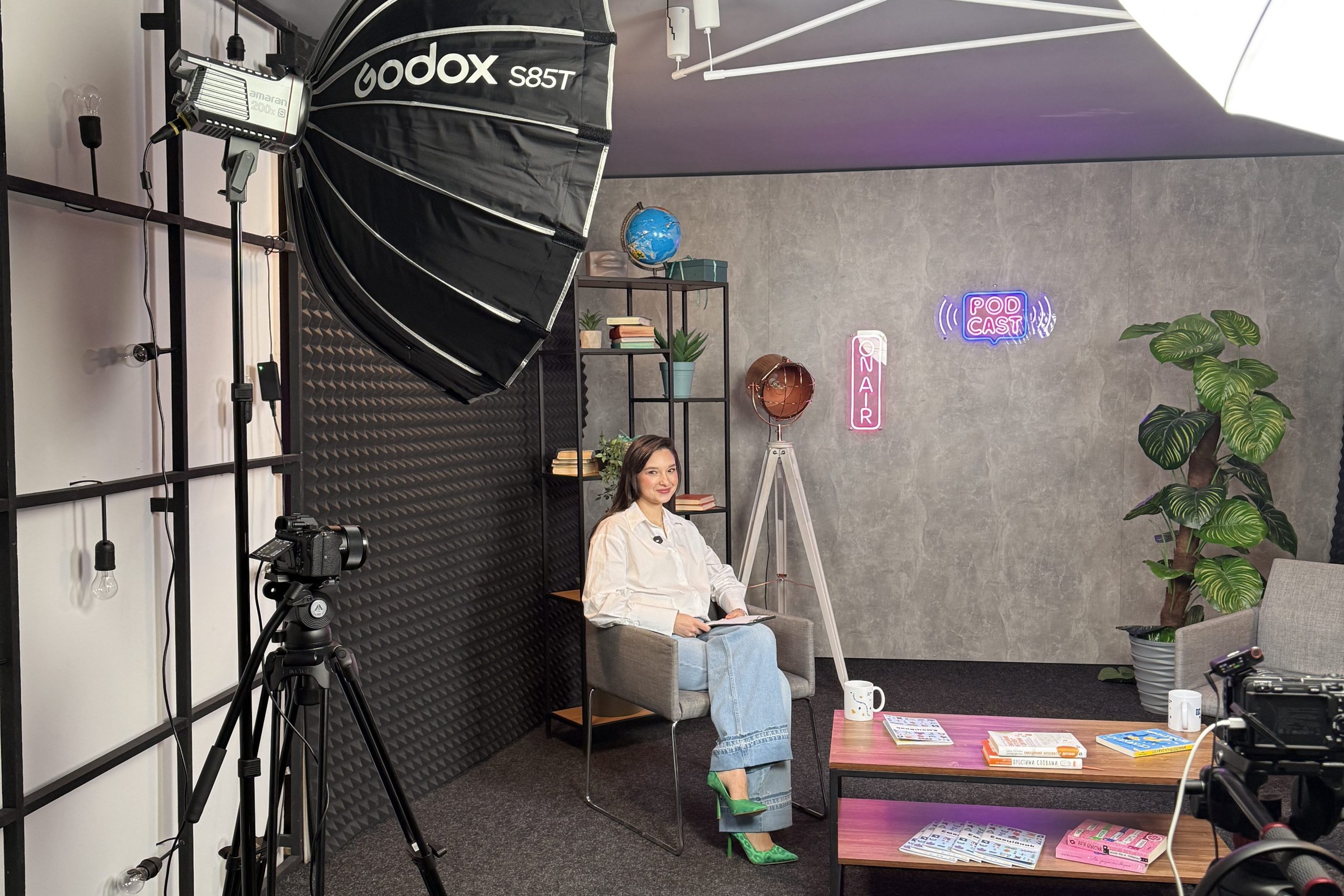
The decision to work with the audience specifically through online formats is based on specific observations.
“We have seen an important trend: the most convenient and effective format for parents to receive information about upbringing and positive parenting is online materials. This is explained by the fact that they can be viewed at a convenient time, at their own pace, without the need to engage in additional interaction,” she notes.
Another illustrative example is the comprehensive work of the Divchata NGO. The Ukrainian organisation works on prevention and also develops youth leadership through the Feminist Academy and offers long-term psychological support to young people, focusing on accompanying recovery processes rather than simply responding to crises.
An additional layer is digital. Here, the approach works not as an application, but as a full-fledged tool for engaging with the audience. “We use digital as an educational tool that allows us to talk about complex topics simply and accessible to young people,” Kateryna Zaichenko explains.
It’s not just about information, but about formats that don’t look like education in the classical sense. For example, the song ‘Guard Your Borders (STOP!)’, created together with ‘Aunt Panda’ on TikTok, or the podcast ‘Strength in You’, where difficult topics are discussed through the experiences of people the audience trusts. This changes the very dynamic, from “telling” to “engaging”.
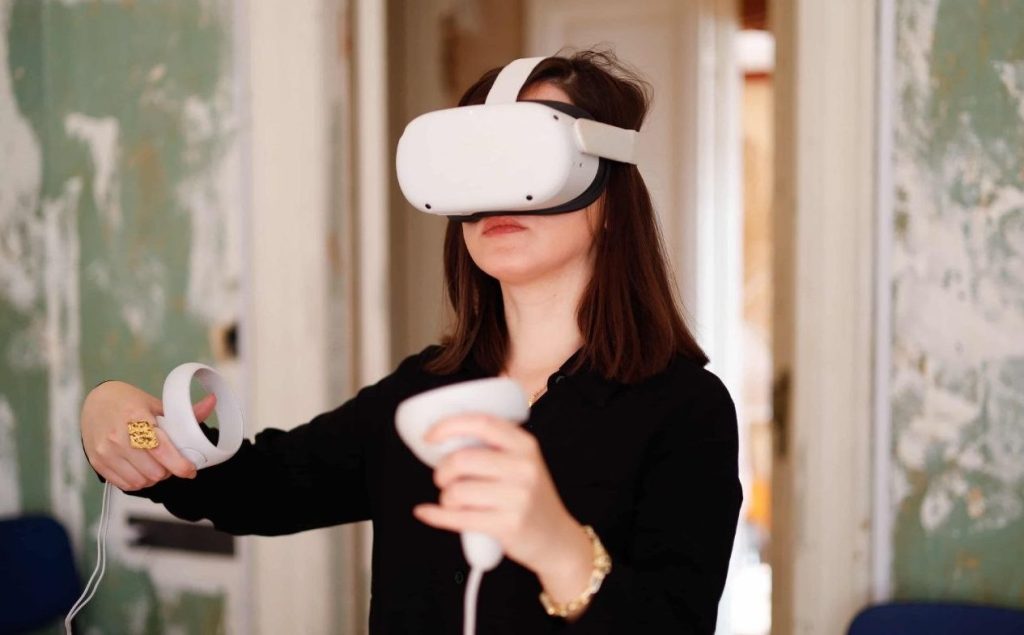
This is where interactive formats come in – online tests that work as a quick and personalised experience. They allow you not just to get information, but immediately to relate it to yourself – for example, to assess your own behaviour in the digital environment or learn to notice manifestations of violence in everyday life. And that’s why they work.
Theatre director and applied theatre facilitator Aynur Zarrintac, who works at the Ritual Theatre and Creativity Laboratory based in Azerbaijan, focuses on using theatre as a tool to support young people’s mental health, emotional expression, and creativity.
“Together with my team we also worked on two plays adapted on VR and one inclusive bear robot bot. Through these products help us to measure how we can also work in virtual reality with mental health and creativity,” she says.
Aynur Zarrintac was particularly interested in mental health support methodologies used in Finland. “These emphasise gradual engagement, emotional safety, and non-verbal participation, key for young people experiencing loneliness, gambling addiction, or social withdrawal,” she notes.
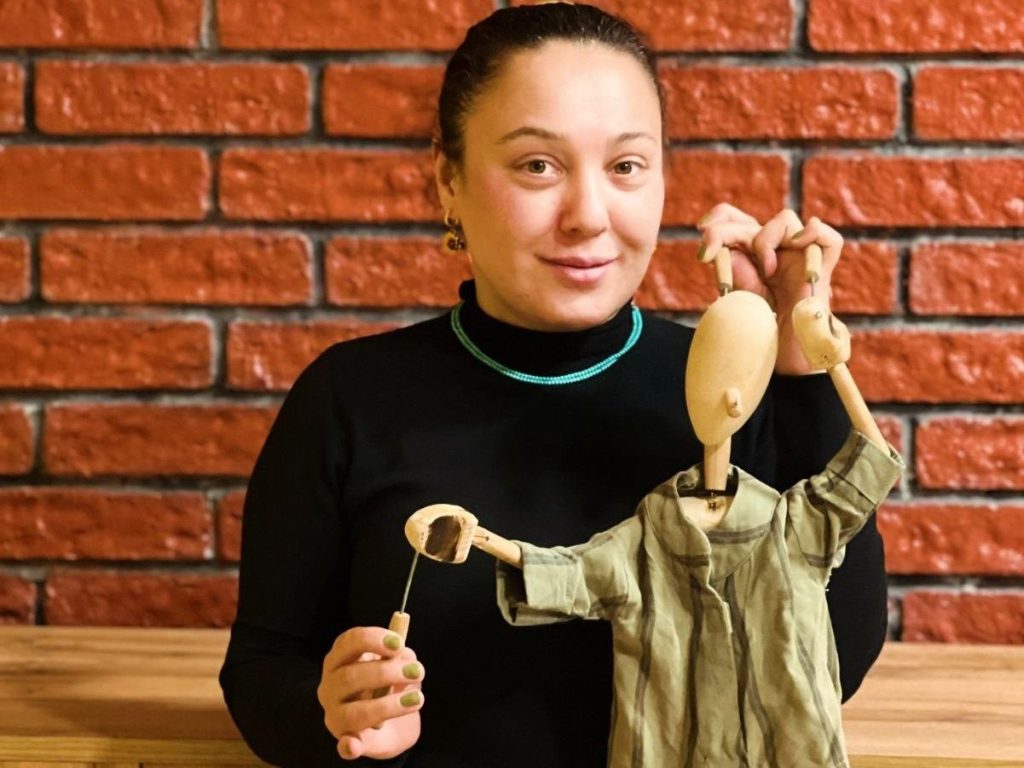
The facilitator is considering applying these approaches in her theatre work in Azerbaijan, combining creative methods, drama and storytelling.
Why sometimes it’s enough just to leave the house
Back in Finland, not all change starts with a conversation. Sometimes it starts with having a place to go.
There are many such places in Helsinki, about 60 youth spaces within the city limits alone.
And these are not separate initiatives, but systematic work: everything is financed by the city, so it is completely free for young people. “In such spaces, young people can engage in sports, creativity and social interaction in one place, from basketball or boxing to needlework, cooking or board games,” said the staff of the Oodi central library in Helsinki.
Inside, it looks like a mix of different environments. There are recording and podcasting studios where you can record audio or music, video and photo studios, editing stations, equipment that you can use on site. There are play areas, rooms for group work, open spaces for meetings and events. All of this is available for free.
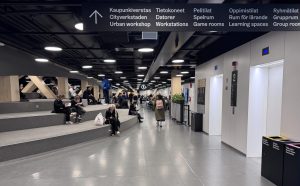
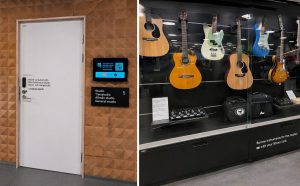
Such centres are important in times of instability, as in 2025 the unemployment rate in Finland rose to around 10%, while among young people it reached 20%, one of the highest rates in the EU.
Models work – systems don’t?
In recent years, initiatives within EU4Youth – the largest programme to support youth in the Eastern Partnership – have been forming a common framework, from employment to mental health.
Observations by national coordinators show that effective models already have common features. The best are those that lower the threshold of entry and do not require complex procedures, allow for anonymity and do not immediately force you “officially” to seek help. Peer-to-peer formats play an important role – when young people talk to young people – as well as approaches that consider the cultural context and habits of the users themselves. But the key is systemic prevention: not individual campaigns or projects, but the constant presence of support that becomes part of the everyday environment.
Among the challenges are the short project cycles of projects related to the mental health of young people. Initiatives appear but rarely have a continuation, each time you have to start anew, without accumulating experience and without a stable effect. Efforts are often aimed at reaction, rather than early intervention. This is clearly visible even where there are many activities – their number alone does not mean that the system works.
Inequality of access is particularly evident. In smaller countries, like Moldova and Armenia, or outside large cities, opportunities are sharply limited, and support becomes fragmented or unavailable altogether. Added to this is the invisibility of some groups. Young people who do not fit into the “standard” categories of programmes often simply fall out of sight, and therefore out of access to help. In such conditions, even existing services do not guarantee that those who need them most can use them.
The situation is also complicated by the general context. In some countries, legislation does not keep up with the needs of young people or remains too general to work in practice. In others, such as Georgia or Belarus, the political context affects even the possibility of researching the topic, let alone systemic solutions. This means that the issue is not only about resources or approaches, but also about the extent to which the environment allows these approaches to develop.
Finland’s experience shows what a systemic state response can look like. The experiences of Ukraine and Azerbaijan demonstrate how these solutions are adapted in contexts with fewer resources and greater challenges. It is at this intersection that the EU4Youth programme has been funding local initiatives over the past years, and where a new model of working with youth in the region is now taking shape.
Author: Olga Konsevych
Article published in Ukrainian by TSN.ua
The post One conversation can change everything: from Finland to Ukraine, rethinking what young people need – and how to support them appeared first on EU NEIGHBOURS east.


