“HamBuyr”: How the forgotten tradition of “pishki” was revived in Ijevan

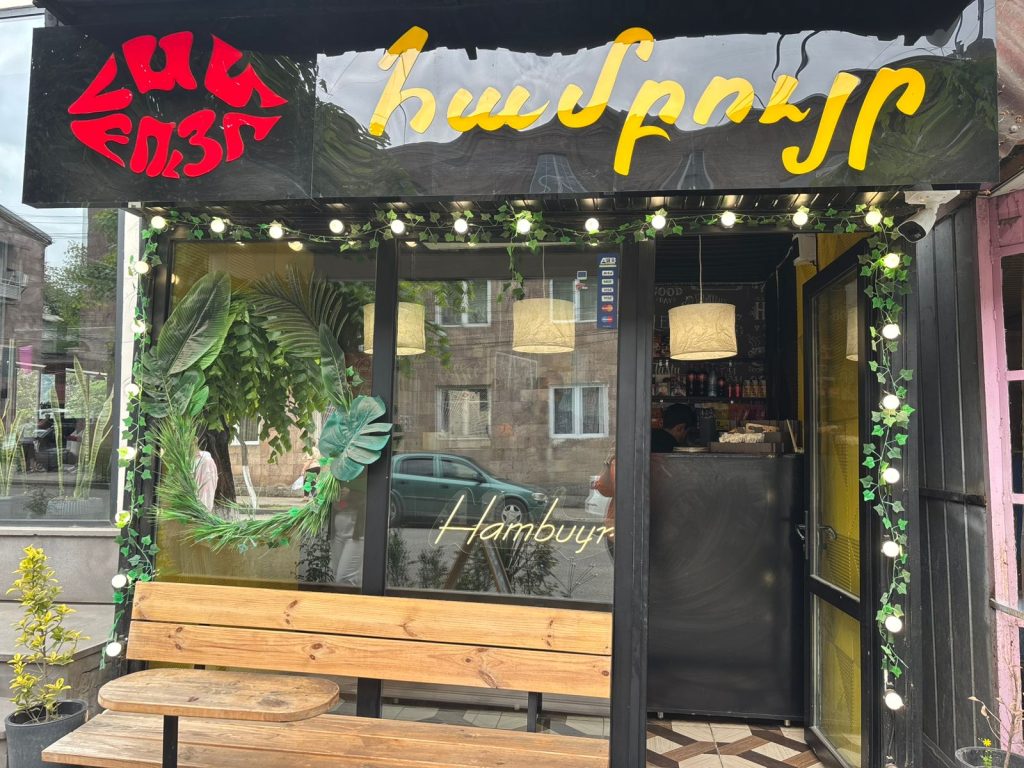
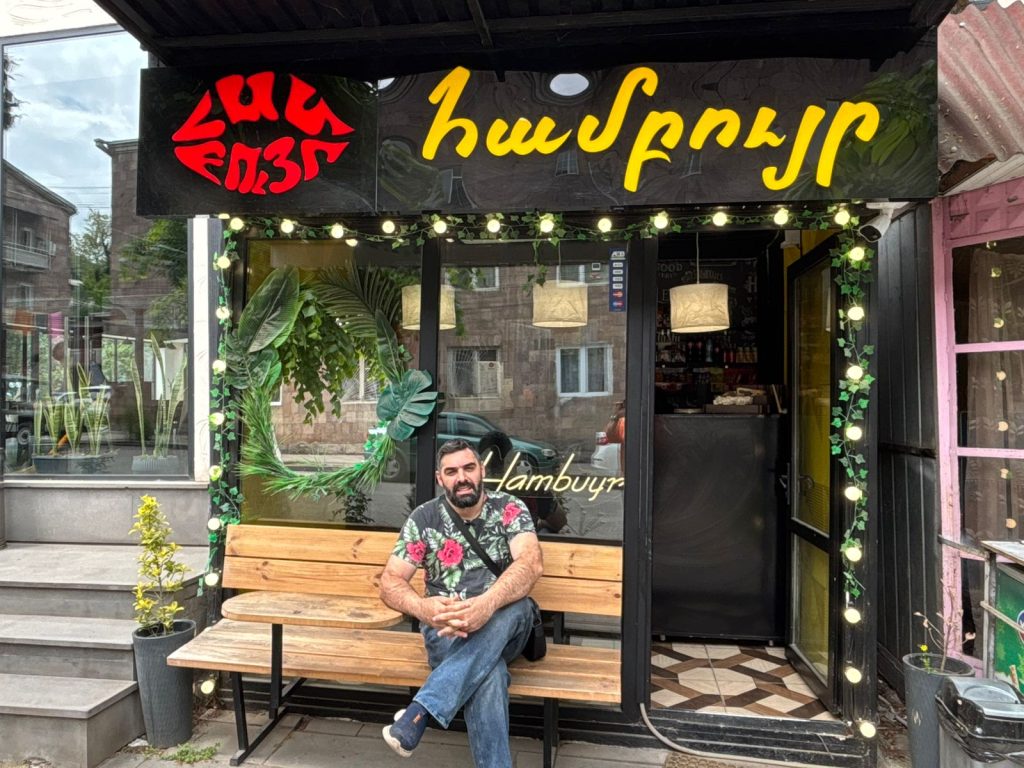
The aroma of fresh pishki and coffee now fills the air from a small kiosk near the city park of Ijevan, Armenia. This is “HamBuyr”, a café founded by Tigran Sargsyan and his wife Anna Eghoyan, which has quickly become a favourite spot for local youth and visitors.
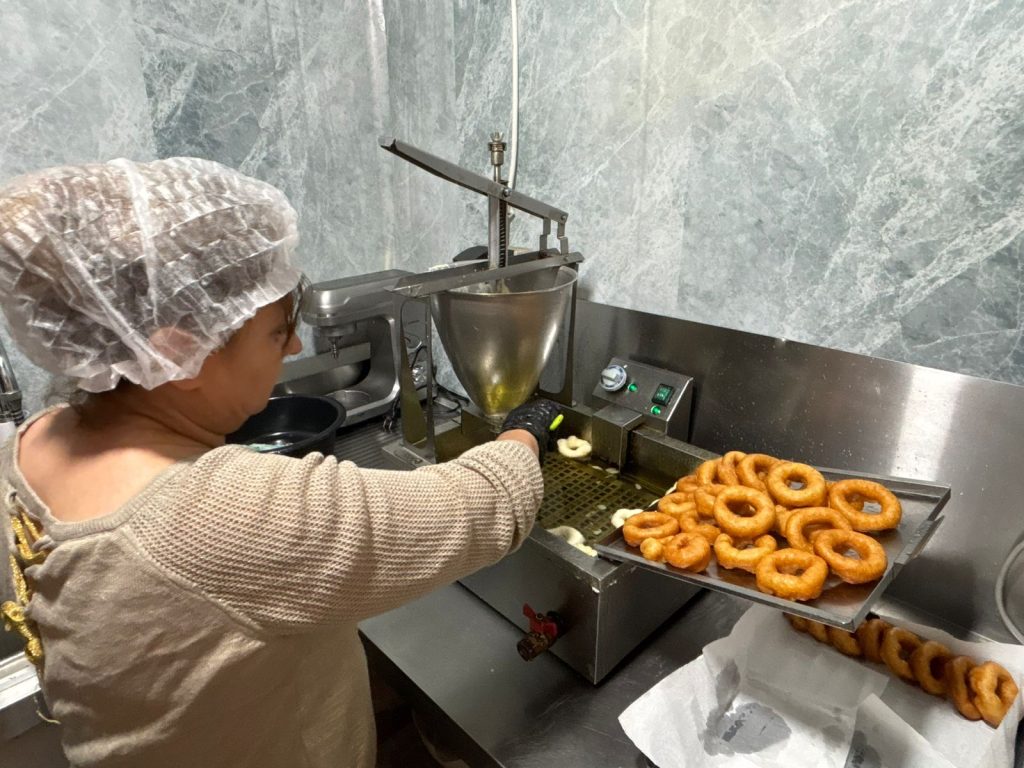
Pishki are a type of sweet pastry similar to doughnuts. They are made from soft dough, usually deep-fried, and often sprinkled with powdered sugar or filled with different creams or jams.
The café opened last year, bringing fresh spirit to the urban life of Ijevan. When Tigran decided to start his own business, he chose to focus on this nostalgic dessert. At a time when the market was saturated with American-style doughnuts and modern fast-food options, he decided to return to a more familiar and comforting taste – the pishki, a widely popular and beloved treat․
“There are well-known brands in Yerevan that started with pishki and achieved great success. We thought – why not bring that ‘trend’ and interest to Ijevan as well?” says the founder.
The café’s name was also carefully chosen. “HamBuyr” is a wordplay combining the Armenian words for “taste” and “aroma”. It also conveys a warm and friendly sound.
A key role in the café’s establishment was played by the “SKYE NET: Skills and Knowledge for Youth Empowerment” programme, implemented by World Vision Armenia with the financial support of the European Union within the framework of the EU4Youth programme, in partnership with Iris Business Incubator, World Vision Georgia, and the Millennium Training and Development Institute, through which Tigran was one of the sub-grant recipients.
Start and purpose
Tigran admits that before opening the café, he had no experience in business management or finance – “I started everything from scratch”. In spring 2025, renovation work began, and by May, the café welcomed its first customers. Today, “HamBuyr” has been operating for a year.
“Before the training, I had no idea how to do financial calculations, how to properly apply for grants, or how to find relevant information,” notes Tigran.
In order for “HamBuyr” not to remain just another food outlet, the founders also focused on brand presence in the digital space and market research.
Before launching, they carefully studied the local market to understand what Ijevan was missing. The target audience was defined as young people who value not only quality but also aesthetics.
Today, “HamBuyr” continues to evolve. Tigran and his wife Anna consistently introduce new offerings, expand services, and regularly update the menu to keep the café attractive and engaging for customers.
Specifics of doing business in Ijevan: Seasonality
The café is located next to the city park. The space is small, accommodating only 3–4 people indoors, so the main service model is take-away, which is still a relatively new culture in Ijevan.
“What sets us apart from other cafés in the city is that only we offer pishki. In addition, our sweets are designed for on-the-go consumption: people take their order and continue walking in the park,” says Tigran.
“HamBuyr” also stands out for its target audience. The main focus is on creating a comfortable and pleasant environment for youth.
The café also has a competitive advantage in pricing. Compared to Yerevan, prices are approximately 25–30% more affordable, and the average customer spend is around 1,000 AMD. This allows customers to purchase coffee, fresh juices, sweets, or light snacks at accessible prices.
One year of experience has shown that running such a business in Ijevan is highly dependent on seasonality and weather conditions. Last summer fully met expectations, with visitors from the city, nearby villages, and tourists.
However, during winter, business slows down. “If the weather is bad, people simply do not leave their homes, no matter how tasty the offer is,” he says.
Still, he views this as a challenge and an opportunity to work harder and introduce new ideas.
“After we opened, we also noticed an impact on the local market: several new fresh juice spots opened nearby. This showed that the format was truly in demand. And this will have a significant impact on the city’s economy,” says the founder.
Social responsibility: more than a café
At the core of “HamBuyr” are not only delicious pishki but also a clear vision of contributing to the community. A key requirement of the programme was a social component, which Tigran and Anna gladly integrated into their business model.
Today, the café offers employment opportunities for local youth, allowing them to gain experience in service and business.
However, the social impact does not end there.
A portion of the café’s income is planned to be allocated to initiatives aimed at early detection of breast cancer, especially as the number of cases has been increasing in recent years. Through this initiative, the café aims to contribute to greater awareness, prevention efforts, and support for women’s health in the community.
“We plan to support screenings, mammography examinations, as well as organise informational events and seminars,” says Tigran.
According to him, due to financial limitations and business seasonality, the programme has not yet been fully implemented, but it is intended to be continuous.
Formula for success: try, learn, and strive
At the end of the conversation, Tigran shares his advice for those who are still hesitant about starting their own business.
“You must definitely try. Those who act achieve results. Those who don’t try achieve nothing – neither good nor bad. But trying alone is not enough; you must constantly learn, communicate with people, and exchange ideas and knowledge.”
In his view, without ambition, there is no movement.
“If you stop and do not grow, it means you are standing still.”
Thanks to this continuous movement, willingness to learn, and experimentation with new ideas, “HamBuyr” has become not only a café in Ijevan but also a successful example of a small business.
This story once again highlights the role of the EU4Youth programme in empowering young people and enabling them to bring their ideas to life.
The “SKYE NET: Skills and Knowledge for Youth Empowerment” programme is implemented by World Vision Armenia with financial support from the European Union, in partnership with Iris Business Incubator, World Vision Georgia, and the Millennium Institute for Training and Development.
The EU4Youth Phase III: Youth Employment and Entrepreneurship programme, co-funded by the European Union and the Ministry of Foreign Affairs of Lithuania, is implemented by the Central Project Management Agency (CPVA) in the Eastern Partnership countries: Armenia, Azerbaijan, Belarus, Georgia, Moldova, and Ukraine. The programme aims to provide technical assistance to governmental and non-governmental organisations to tackle youth unemployment and improve employability.
The post “HamBuyr”: How the forgotten tradition of “pishki” was revived in Ijevan appeared first on EU NEIGHBOURS east.


