From civil society to regional work in the Eastern Partnership: how EU4Youth scholarship at Natolin prepared Nensi Mkrtchyan for a cross-border role

Nensi Mkrtchyan did not follow a straight line into the work she does today. Her journey moved through marketing studies, university administration, parliamentary committees, and years of hands-on engagement with civil society – before the EU4Youth Scholarship Programme at the College of Europe in Natolin gave her the academic grounding to bring it all together.
She holds a Bachelor’s degree in Marketing from the French University in Armenia and completed a Political Science course at Charles University in Prague. Over the past decade, she built her experience at the intersection of civil society, EU-Armenia relations, and international cooperation – working with organizations active in EU cooperation and civil society development.
Today, she serves as Regional Coordinator for Armenia, Georgia, and Azerbaijan within the Eastern Partnership Civil Society Fellowship, a role that builds directly on the knowledge, experience, and networks she developed as an EU4Youth beneficiary at the College of Europe in Natolin during 2022-2023.
A decade of civil society work
Before Natolin, Nensi had already accumulated 10 years of experience in the civil society sector. She worked at the Parliament of Armenia and the French University in Armenia, where she became increasingly involved in projects that bridged institutions, civil society, and international partners. The EU was a constant thread – in the initiatives she supported and the networks she joined.
It was through those networks – the Young European Ambassadors’ Initiative and the EU4Youth Alumni network that she first heard about the Natolin Fellowship Programme. What stood out immediately was the programme’s focus: “The College of Europe in Natolin stood out as a unique academic and professional environment focused on EU policies, the Eastern Partnership, and regional cooperation. Given my background in civil society and EU-related projects, I saw the programme as an opportunity to deepen my knowledge, strengthen regional perspectives, and further develop my career in EU cooperation.”
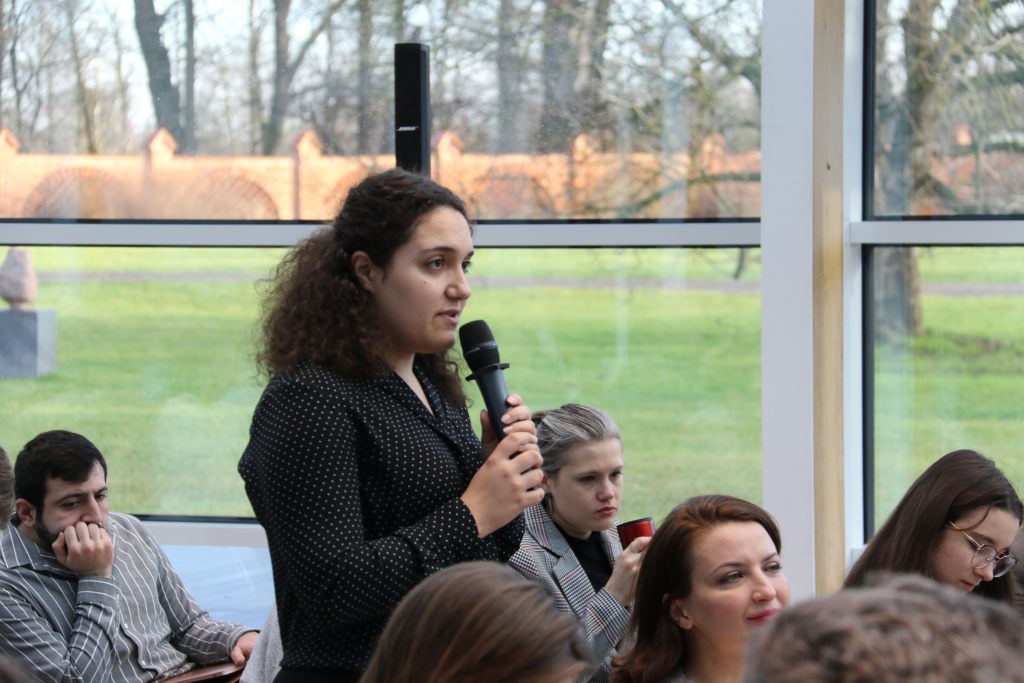
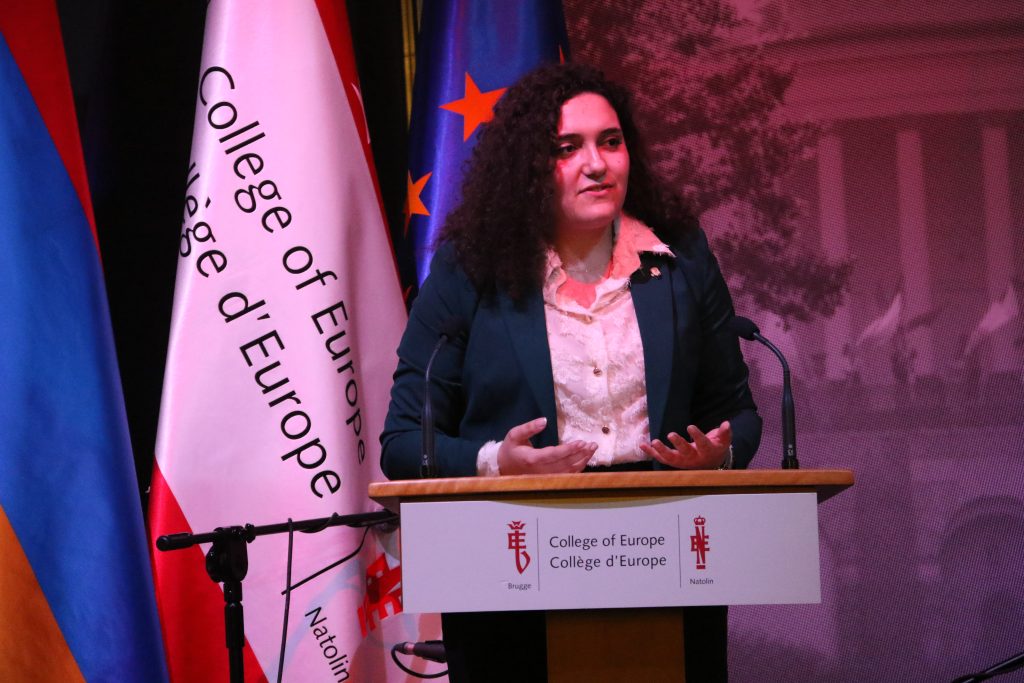
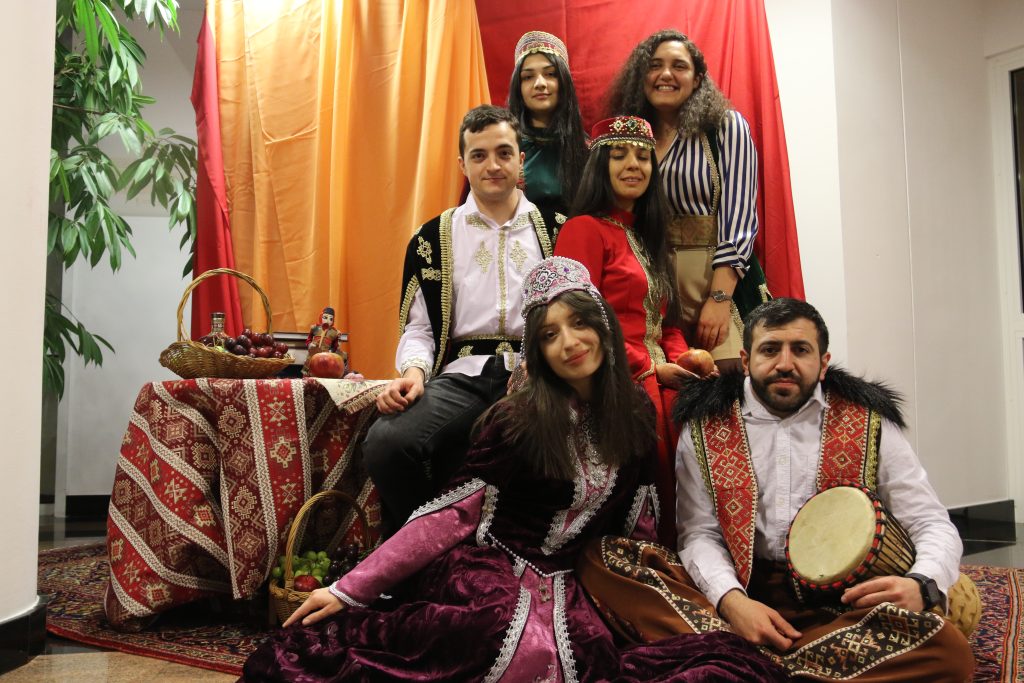
Research rooted in lived experience
At Natolin, Nensi focused on EU external action and civil society development in the Eastern Partnership region. Her thesis examined EU support to Armenian and Georgian civil society organizations – a topic she approached not as an outside observer, but as someone who had worked within that sector for ten years.
The research allowed her to combine academic rigour with lived professional experience – analyzing how EU funding and institutional frameworks shape civil society development in two countries she knows well, and identifying where the gaps and opportunities lie.
She described her Natolin experience in three words: networking, international, European.
“One of the most valuable aspects of Natolin was the diverse community. Learning alongside professionals from different regions broadened my perspective and strengthened my commitment to regional cooperation. This experience continues to shape my approach to coordination and partnership-building today”, says Nensi.
Study trips and practical insight into EU integration
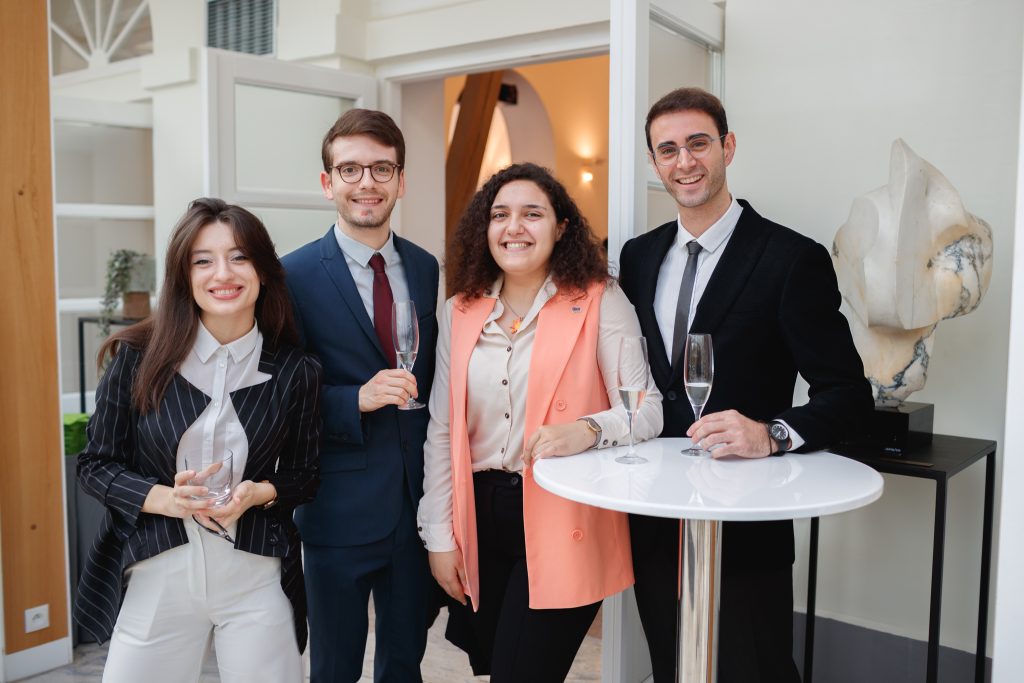
Among the specific experiences that left a lasting impression, Nensi highlights the study trips to Galicia in Poland, Montenegro and to Bosnia and Herzegovina in the Western Balkans: “The study trips were especially impactful. They provided practical insight into EU integration processes, regional cooperation models, and the role of civil society in transformation processes. These experiences helped me better understand how lessons from different regions can be applied to the Eastern Partnership context.”
For someone working on EU-Armenia and regional Eastern Partnership (EaP) issues, seeing integration processes from the inside – both in a country that has been through accession and in countries still navigating that path – offered a comparative dimension that classroom study alone cannot provide.
A stronger regional approach
Since returning from Natolin, Nensi has brought a more structured regional approach to her work. She describes applying stronger cross-country coordination practices, increasing knowledge-sharing among civil society actors in the Eastern Partnership, and integrating EU policy perspectives more deliberately into project design and communication strategies.
Her current role as Regional Coordinator for Armenia, Georgia, and Azerbaijan within the Eastern Partnership Civil Society Fellowship places her at the centre of exactly the kind of work the Natolin year prepared her for coordinating EU-funded initiatives across borders, strengthening civil society networks, and supporting dialogue between local organizations and European institutions.
Natolin’s lasting impact on her career and outlook
On a more personal level, Nensi reflects that the Natolin experience reinforced something she had sensed but not yet fully articulated: “The experience reinforced my commitment to working in international and regional environments. It also showed me the importance of bridging local civil society expertise with European policy frameworks to create meaningful and sustainable impact.”
Her advice to young professionals considering a similar path is to: “Be curious about regional developments, engage in civil society work early, and actively seek international opportunities. Building networks, gaining practical project experience, and understanding EU policies can significantly support a career in this field. Most importantly, remain open to collaboration and continuous learning.”
Nensi Mkrtchyan’s journey shows that careers in EU cooperation are rarely linear, but they gain strength from the ability to connect experience, knowledge, and perspective across contexts. The EU4Youth Scholarship Programme at the College of Europe in Natolin, Warsaw did not define her path, but it sharpened it, offering the structure, exposure, and regional lens needed to move from national engagement to coordinated regional work. Today, her role reflects that evolution: bringing together civil society actors, aligning local realities with European frameworks, and contributing to a more connected and resilient Eastern Partnership region.
The EU4Youth Phase III Youth Employment and Entrepreneurship programme, co-funded by the European Union and the Ministry of Foreign Affairs of Lithuania, is being implemented by the Central Project Management Agency (CPVA) in Eastern Partnership countries. These include Armenia, Azerbaijan, Belarus, Georgia, Moldova, and Ukraine. The programme will run until the middle of 2026 and aims to provide technical assistance to governmental and non-governmental organisations to tackle youth unemployment and improve employability.
The post From civil society to regional work in the Eastern Partnership: how EU4Youth scholarship at Natolin prepared Nensi Mkrtchyan for a cross-border role appeared first on EU NEIGHBOURS east.


