Employment services that work: adapting to a changing job market with EU4Youth support

Across the Eastern Partnership (EaP), Public Employment Services are under pressure to adapt to a changing labour market, growing youth inactivity and, for some countries, the broader demands of EU integration. Through the EU4Youth programme, the European Union has supported this transition by helping employment institutions become more modern, connected and responsive to young people’s needs.
Nearly one in four young Armenians is not involved in education, employment or training (NEET). Many young people in the Eastern Partnership region face major barriers when entering the labour market. Across the region, the percentage of NEET youth remains high compared to the EU average, reaching 14.5% in Moldova and 14.3% in Ukraine, according to the latest data. Women are more seriously impacted, reaching almost 40% in this category. Existing challenges, such as skills mismatches, limited career guidance and weak links between education and employment systems, have been intensified by the COVID-19 pandemic, Russia’s war of aggression against Ukraine and political instability. Other factors impeding access to the labour market include gender inequality, disparities in education and opportunities in rural and urban environments, and social exclusion of vulnerable groups.
In this context, improving Public Employment Services (PES) has become a shared priority and an area of collaboration between EaP countries and the European Union. Under the EU4Youth Phase III Youth Employment and Entrepreneurship programme, the EU supported this transformation through a broad regional effort focused on institutional capacity building, mutual learning and cooperation. The programme didn’t target individuals directly. Instead, it invested in strengthening the systems behind youth employment policies, with the goal of optimising the institutions that can provide better services for young people in the long term. “Without a clear strategy or proper performance management, for example, we won’t be able to reform or deliver good work at the level of PES – these were some of our priorities,” said Christian Wagner, Team Leader of the Technical Assistance Component of the Programme. For Moldova and Ukraine, the programme plays an essential role, contributing to the alignment with EU standards and supporting their integration ambitions.
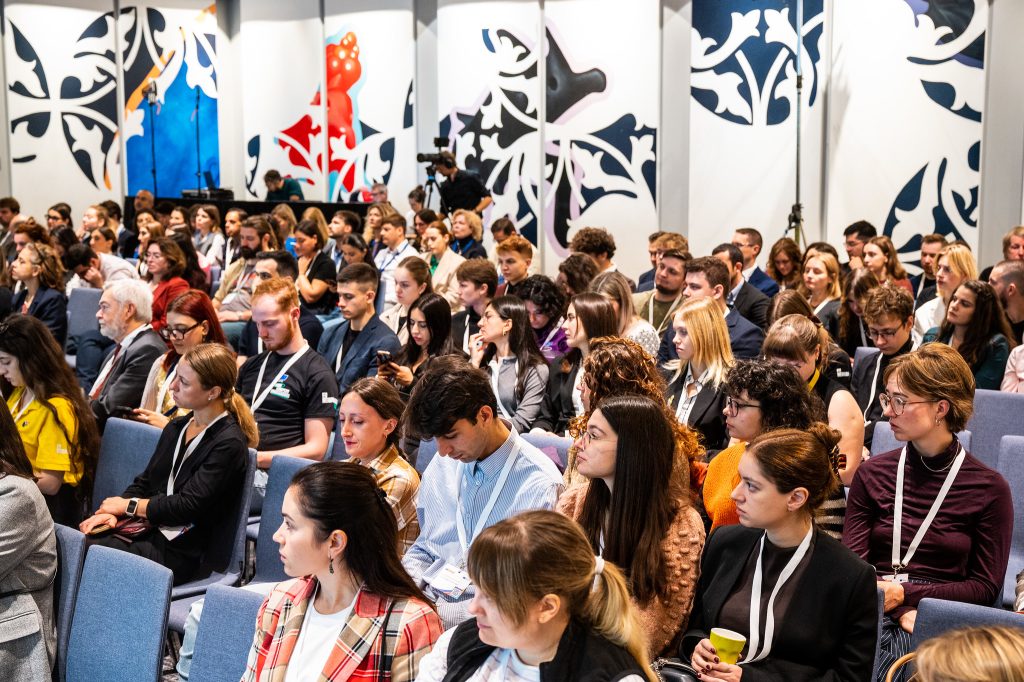
As a result, the Public Employment Services improved their approach to inclusion, made a shift towards evidence-based policy making, and embraced digitalisation in order better to respond to an evolving labour market. “We have transformed how we communicate and interact with our clients. We are shifting from an institutional, passive model to a client-centred and proactive approach,” said Yuliya Zhovtyak, Director of State Employment Service of Ukraine during the programme’s closing conference.
Building better systems for youth employment
Between 2022 and 2026, the programme reached directly more than 8,000 participants through trainings, outreach, pilots, and tool dissemination. PES staff in the participating countries benefited from targeted capacity building, supported by 14 workshops, webinars and study visits across the region and the Baltic states. The programme’s results are visible not only in numbers, but in the testimonies of those involved: “It’s not only about participation. It’s about progress, development and a change in mentality,” said Lilia Plugaru, Deputy Director of Moldova’s National Employment Agency (ANOFM) during the closing conference.
At the centre of the programme stood the Mutual Learning Plan (MLP), a structured framework inspired by the EU PES Network’s bench-learning methodology. It aims to help PES across Europe to improve their performance by comparing themselves with counterpart institutions and learning from them via qualitative and quantitative assessments. The methodology combined study visits, expert support and continuous training, all tailored according to the needs identified in each country. Training topics ranged from employer engagement and jobseeker profiling, to digitalisation and inclusion for vulnerable groups.
Witnessing the work of their peers in Lithuania, Latvia and Estonia allowed PES representatives from the Eastern partner countries to observe in practice how EU member states organise youth-oriented services, design active labour market policies and employer cooperation. For many participants, these exchanges went beyond technical learning. “The staff involved in these study visits were very impressed and motivated, study visits are a practical way to see and learn from our colleagues how to improve our services,” said Lilia Plugaru from ANOFM.
Importantly, the programme was designed for long-term sustainability. Training materials were transferred directly to institutions, while ‘training of trainers’ activities prepared local experts to continue capacity building internally after the programme’s completion.
A bridge to European standards
For Moldova and Ukraine, strengthening PES systems is part of the broader alignment with EU standards in the context of accession negotiations. In Ukraine, stakeholders explicitly linked programme participation to EU integration efforts, describing the reform processes as supported by EU expertise and instruments. One such example is the programme’s assistance with the preparation of a pilot application under the European Social Fund Plus (ESF+) Social Innovation Call on Skill Guarantee. Another example is the development of an Employer Cooperation Strategy in Ukraine, designed to build structured and results-oriented engagement with employers.

The programme also reinforced links to broader EU initiatives, including the European Alliance for Apprenticeships. This platform plays an important role in connecting education and employment systems by promoting apprenticeship models and work-based learning across Europe and in partner countries, as highlighted by Rūta Grigaliūnienė, Department Head at Central Project Management Agency, Lithuania. Ukraine’s engagement with the Alliance was described as an important step in the transition from education to employment.
At the same time, in Moldova ANOFM carried out a self-assessment aligned with European PES standards. This process helped identify institutional strengths and areas for future improvements while helping the country move closer to EU standards in institutional governance. PES reform is now being embedded in Moldova’s national employment strategy and digitalisation reforms, which are also aligned with EU policy frameworks.
The Baltic study visits left a particularly strong impression on participants. Officials from Moldova and Ukraine highlighted Estonia’s digital employment services as an important source of inspiration. Others pointed to examples from Latvia and Lithuania related to continuous learning, youth counselling and employer partnerships.
For many participants, the programme’s value lies in the professional relationships built between institutions. “The results will come in the future too, because it’s a continuous development of our capacity,” noted Lilia Plugaru from Moldova’s National Employment Agency.
How reform took shape in Moldova, Ukraine and Armenia
While regional cooperation was the framework, much of the programme’s impact is more visible at national level. For example, in Ukraine young veterans have to be taken into account when designing the country’s employment strategies. “Now we have approximately one million people on the front line,” noted Dariia Andriunina from the State Employment Service of Ukraine: “We need to understand that all these people one day will come back to the labour market. And we must be ready.” In direct response to the conflict, more than 600 displaced young people received psychosocial and employability support.
In Ukraine, the programme also supported the localisation and adaptation of the European Entrepreneurship Competence Framework as well as the development of the EntreGram4Youth self-assessment tool. It is based on the EntreComp framework, which defines key entrepreneurial skills and competencies, supporting individuals in developing initiative, creativity and business-oriented thinking. It serves as a foundation for developing training materials, designing curricula, shaping educational programmes, and informing policy. The EntreGram4Youth tool was integrated into the Diia.Osvita platform. Through the platform, more than 4,700 young people engaged with the tool to assess and develop their entrepreneurial skills.
The figure was even higher in Moldova, where 95% of respondents reported feeling better equipped to perform their duties. In both countries, PES institutions were strengthened to transition from a reactive model to a system driven by labour market intelligence.
A particularly important component of the programme was outreach to vulnerable groups. In one pilot initiative in Moldova, more than 100 Roma and Sinti NEET youth were engaged through cooperation with local mediators and employment services. Around 70 young people subsequently entered training and support pathways offered by PES, overcoming previous barriers and low engagement.
Moldova also localised and adapted the European Entrepreneurship Competence Framework, (EntreComp), which was officially endorsed by ANOFM and shared with the Ministry of Education and Research.
In Armenia, EU4Youth supported the development of a Professional Orientation and Career Guidance Toolkit for the Unified Social Service (USS). Armenian stakeholders highlighted the importance of connecting young people more directly with labour market opportunities: “We are operating in a reality where young people engage with the labour market differently: digitally, dynamically, and often non-linearly. Public services must adapt accordingly,” said Liana Tovmasyan, Deputy Head of Unified Social Service, Armenia. The programme also delivered trainings on soft skills, digital tools, conflict resolution and prevention of professional burnout for Armenian USS employees.
Staying relevant through war, crisis and political change
The programme operated in an exceptionally unstable environment marked by COVID-19, Russia’s war in Ukraine, political restrictions and shrinking civic liberties in several countries. Activities, partnerships and priorities evolved significantly between 2021 and 2026. Team Leader Christian Wagner described this as one of the programme’s defining circumstances: “I’ve been working in this field for 27 years, and I’ve never had a project where we had so many external shocks.”

Yet flexibility became one of the programme’s strongest strategic lessons. In Ukraine support was rapidly adjusted after the start of the full-scale war. In Belarus, cooperation shifted towards organisations in exile. In Armenia, activities increasingly considered the integration challenges due to displacement and economic issues. This adaptability allowed the programme to remain relevant and have a real impact despite rapidly changing realities.
Reflections on how stronger employment institutions matter for young people
Several lessons emerge clearly from the programme. First, mutual learning and peer exchange can accelerate institutional reform. Study visits and practical cooperation often proved more impactful than purely theoretical policy discussions.
Another important conclusion is that many of the programme’s most sustainable results emerged where institutions actively integrated new approaches into their own systems and strategies. Finally, flexibility is necessary for EU external action in volatile environments. The programme’s ability to adapt to political and economic shocks allowed cooperation to continue even under extremely difficult conditions.
Overall, EU4Youth helped create stronger foundations for reform, strengthened collaboration, and reinforced the role of Public Employment Services as key actors in labour market inclusion and economic development. EU4Youth leaves behind stronger institutions that now have the tools and experience to keep reforming. The programme has already impacted young people’s lives in partner countries, but its real significance will become clear in the years ahead, as PES institutions are better prepared to face upcoming challenges and empower future generations.
The post Employment services that work: adapting to a changing job market with EU4Youth support appeared first on EU NEIGHBOURS east.


