Carpets, Clay, and Children’s Smiles in Tsaghkunk: How Economist Aram Turned a Village Workshop into a Business

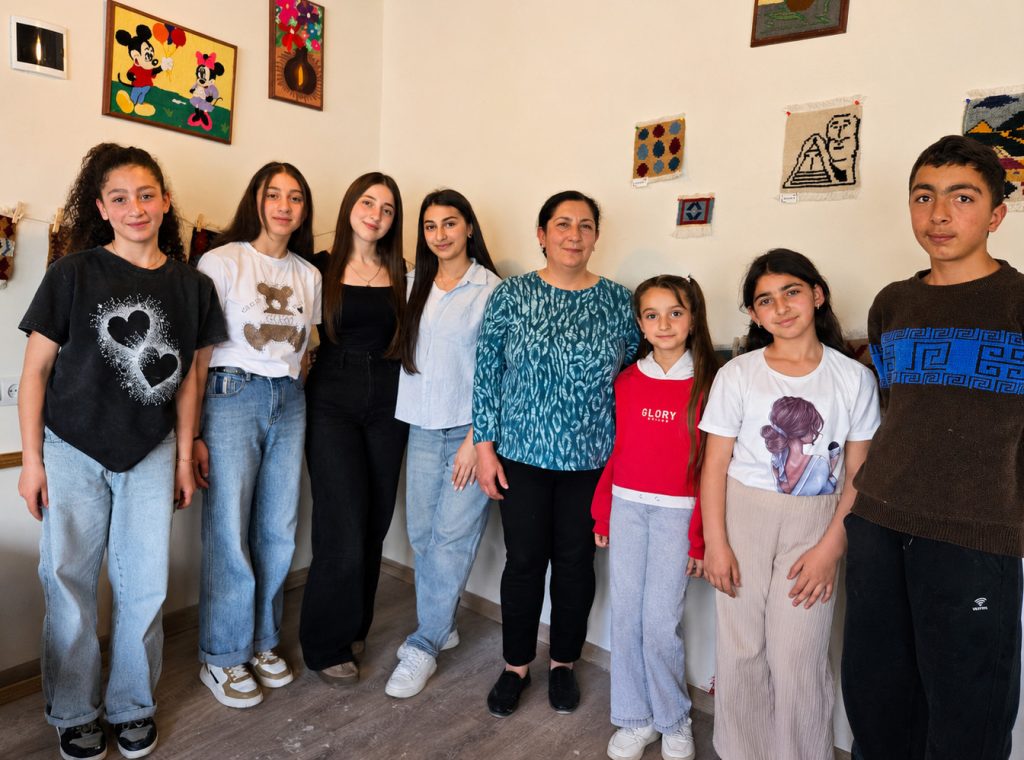
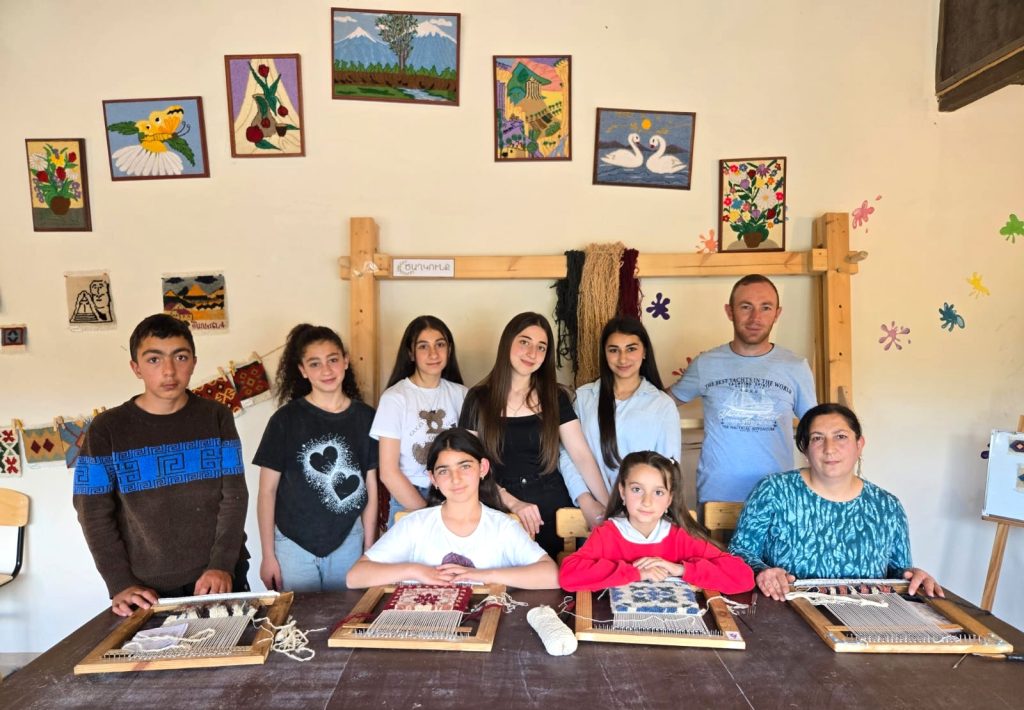
In the village of Tsaghkunk, near Sevan, a normal after-school day for children continues at the village art centre. Here, they learn pottery and carpet weaving, turning their ideas and imagination into handmade creations. In a community of 700 to 800 residents, children and youth have the opportunity not only to acquire new skills but also to discover traditional Armenian crafts, spend their free time in a creative environment, and, in some cases, even generate income through their own handmade work.
The head of the centre is Aram Karapetyan. He is a participant and sub-grant recipient of the “SKYE NET: Skills and Knowledge for Youth Empowerment” project, implemented under the EU4Youth programme. Through his work, he has succeeded in bringing change to the community.
It All Started with his sister’s Eco-Bags and a Pandemic.
The idea of creating the workshop came from Aram’s sister, Gayane Karapetyan, who is currently studying abroad. In 2020, during the COVID-19 pandemic and the 44-Day War, Gayane and her friend turned to art as a form of therapy, creating handmade items such as bags, textile accessories, printed T-shirts, and hats. Later, Gayane and Aram decided to expand on this idea and establish an art centre in the village.
As the centre expanded its activities, it became clear that its existing resources were no longer sufficient. Additional support was needed to launch new initiatives, improve the facilities, and create more diverse opportunities for children and young people. It was at this point that the team began seeking new growth opportunities, one of which was the “SKYE NET: Skills and Knowledge for Youth Empowerment” project, implemented under the EU4Youth programme.
Through the SKYE NET project, the Tsaghkunk Art Centre received a grant of AMD 1.8 million, enabling several significant improvements. The centre’s roof, which had long suffered from moisture-related damage, was repaired.
Thanks to this support, the centre also launched its pottery classes. Sewing machines were also purchased through the project, allowing the centre to start making eco-bags and pillows that combine the children’s drawings with carpet-weaving elements. These pieces became a signature feature of the workshop.
Breaking Stereotypes: The Example of the Fairytale “Anahit”
“Today, keeping children away from phones and tablets and bringing them to a workshop is quite difficult. However, the children of Tsaghkunk attend not out of obligation, but because of the teachers and the warm environment created here. Ultimately, the children’s sincerity is the most powerful indicator; if the environment weren’t welcoming to them, they simply wouldn’t return,” notes Aram.
The centre also breaks stereotypes. Although carpet weaving is often viewed as a girls’ activity, boys also participate in the classes. “If we recall Ghazaros Aghayan’s fairytale Anahit, the king had to learn to weave a carpet to win the princess’s hand. Our Narek also practices carpet weaving with great enthusiasm and tries to develop his skills, and we support him in every way to help him reach his goal,” highlights the centre’s director.
Initially, the centre’s classes were offered free of charge. However, over time, a participation fee was introduced. According to Aram, this change had a positive impact, as parents became more committed to ensuring their children attended the classes, while the children themselves became more consistent and dedicated in their participation.
“If you do your work with love, there will always be a result.”
Reflecting on his experience, Aram emphasises that when applying for such projects, the most important thing is to believe in your goal and not be afraid to take the first step:
“Regardless of what people around you say, or how many say ‘it won’t work, it’s pointless, it’s too hard…’, if someone truly wants to do something to be useful to their community or themselves, they must try. If there is hard work, everything can be overcome. If you do your work with love, there will always be a result. I was sceptical at first, too, but not because I didn’t believe in the project – I just didn’t know it and couldn’t imagine what to expect. Yet, I applied anyway, thinking that at least I would learn something. I didn’t apply solely for financial assistance, but in the end, I received both knowledge and support,” says the head of the centre.
Aram does not hide the fact that difficulties always exist, and financial rewards do not come immediately. Carpet weaving and pottery are not fields that generate a quick, large profit. However, the sewing machines acquired through the grant are already generating some income. People come to use the sewing services – for clothing alterations, remodelling, or tailoring – and those funds help sustain and develop the other departments. Aram is confident that, over time, carpet weaving and pottery will also yield stable results.
His Main Focus: Staying Resilient and Calculating Steps Wisely
“Enthusiasm alone is not enough. It is important to love what you do, but also to plan and understand every single step. During the project, we learned marketing, management, and business planning. We realised that if we organise the work properly and each of us tries to create meaningful value, the results will follow. Nothing is impossible – you just need desire and consistent work.”
For Aram, the Tsaghkunk workshop is no longer just an idea born during pandemic isolation. It has become a small, fully functioning business where children engage in creative work, learn traditional crafts, and, step by step, learn how to create value through their own efforts.
The “SKYE NET: Skills and Knowledge for Youth Empowerment” project is implemented by World Vision Armenia with the financial support of the European Union within the framework of the EU4Youth programme, in partnership with Iris Business Incubator, World Vision Georgia, and the Millennium Training and Development Institute.
The EU4Youth Phase III: Youth Employment and Entrepreneurship programme, co-funded by the European Union and the Ministry of Foreign Affairs of Lithuania, is implemented by the Central Project Management Agency (CPVA) in the Eastern Partnership countries: Armenia, Azerbaijan, Belarus, Georgia, Moldova, and Ukraine. The programme aims to provide technical assistance to governmental and non-governmental organisations to tackle youth unemployment and improve employability.
The post Carpets, Clay, and Children’s Smiles in Tsaghkunk: How Economist Aram Turned a Village Workshop into a Business appeared first on EU NEIGHBOURS east.


