Emma’s story: when waste becomes raw material, art, and a catalyst for community change

“Since childhood, I would take various ‘useless’ items and give them new life and meaning; I was constantly coming up with new ideas and trying to bring them to fruition,” says Emma.
Emma Gevorgyan lives in the Sevan community of the Gegharkunik region, Armenia. A programmer by profession, she realised during her career that she did not wish to work in that field. Since her school years, Emma has been engaged in handicrafts, crocheting various items and creating tapestries. The skills and creative mindset she acquired over the years allowed her to move forward and open new paths.
She is a participant and sub-grant recipient of the ‘SKYE Net: Skills and Knowledge for Youth Empowerment Network’ project, implemented within the EU4Youth programme, through which she has been able to drive meaningful changes in her community.


First experiments with waste
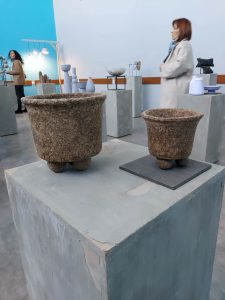
Emma’s journey toward waste recycling began with an initiative where the task was to work with waste and create a product from it. Participants found it difficult to imagine what could be made from trash. It was then that Emma first presented an idea that would later become one of the main directions of her creative path: chandeliers made from paper waste.
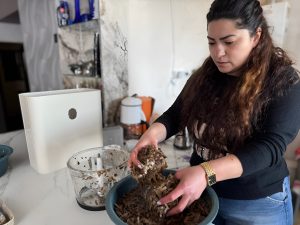
This concept sparked great interest among both trainers and participants. After various experiments, trials, and errors, Emma found the necessary raw materials and created her first pieces. At first glance, they appear to be made of clay, but they are actually crafted from paper waste and glue, making them lighter and more durable than clay.
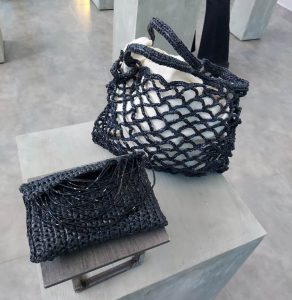
Following her first successful experiment, Emma had the idea to return to her childhood roots and try giving waste a new life once again. Inspired by the work of a famous fashion house, Emma took a new approach and created designer bags from plastic sacks. “I collected large bags from clothing stores that are usually thrown away, and through a special technology, I turned them into yarn and then crocheted my bag. designers have also appreciated this concept, and I have made sales. It is very important to me that whatever I do, I do with quality, so that my products are long-lasting,” Emma explains.
The SKYE Net project: education, structure, and stabilisation
A decisive role in Emma’s creative activity was played by the SKYE Net – Skills and Knowledge for Youth Empowerment Network project, implemented by World Vision Armenia under the EU4Youth programme. Emma learned about the project from friends, and applied without high expectations. Her primary goal was to gain an education – to understand how to structure, present, and develop her ideas correctly.
A key element of the programme was its social dimension, which required that projects contribute to a meaningful social cause. Emma incorporated this by presenting two initiatives: engaging women from the Sevan Women’s Club in creating diverse products from recycled materials, and promoting community awareness around waste sorting and collection.
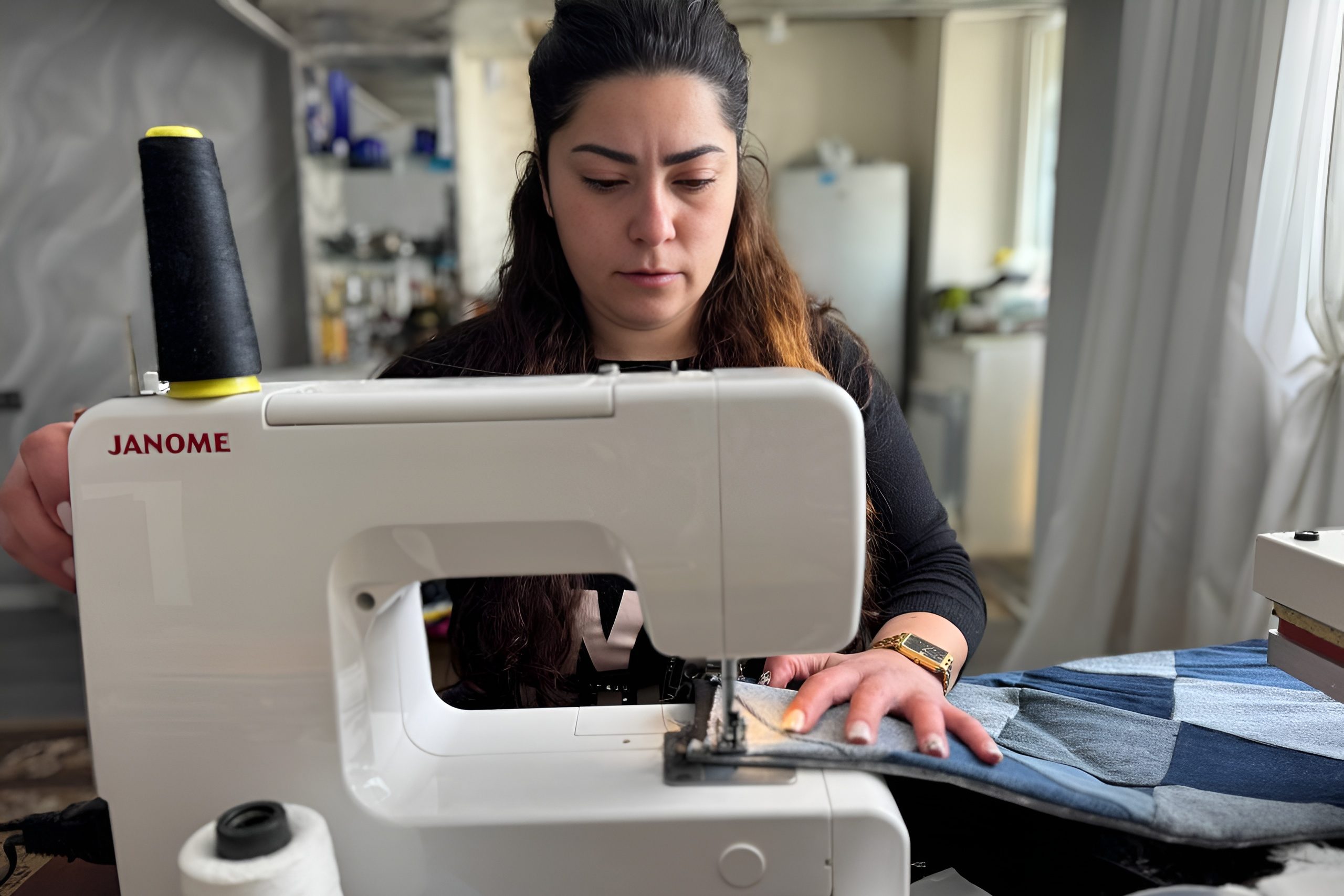
Through the courses held as part of the programme, Emma learned the fundamental principles of business in a systematic way for the first time. She understood how to calculate product costs, set pricing, master various legal and accounting skills, and prioritise the role of marketing in her work.
“Thanks to all of this, I realised it isn’t right to have a diverse range of products all at once. It is more effective to start with one or two specific directions, develop them, understand the market, and only then expand step by step. That is why I decided to focus specifically on chandeliers and crocheted bags,” says Emma.
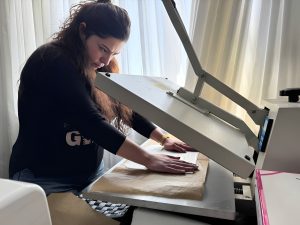
The next step after her studies was the acquisition of equipment. Thanks to a sub-grant received through the SKYE Net project, Emma acquired machinery-sewing machines, a pressing machine, and packaging supplies. This support became a crucial launching pad.
From that moment on, Emma’s activity transformed from a hobby into more stable, structured, and purposeful work. She became an individual entrepreneur and began thinking not just about creating, but also about establishing a workshop.
Community work and social impact
Today, Emma’s activities have expanded beyond the realms of art and product manufacturing. She is actively involved in the development and implementation of a waste sorting and collection system in the city of Sevan. Waste bins are being installed in the city, while Emma conducts large-scale awareness campaigns.
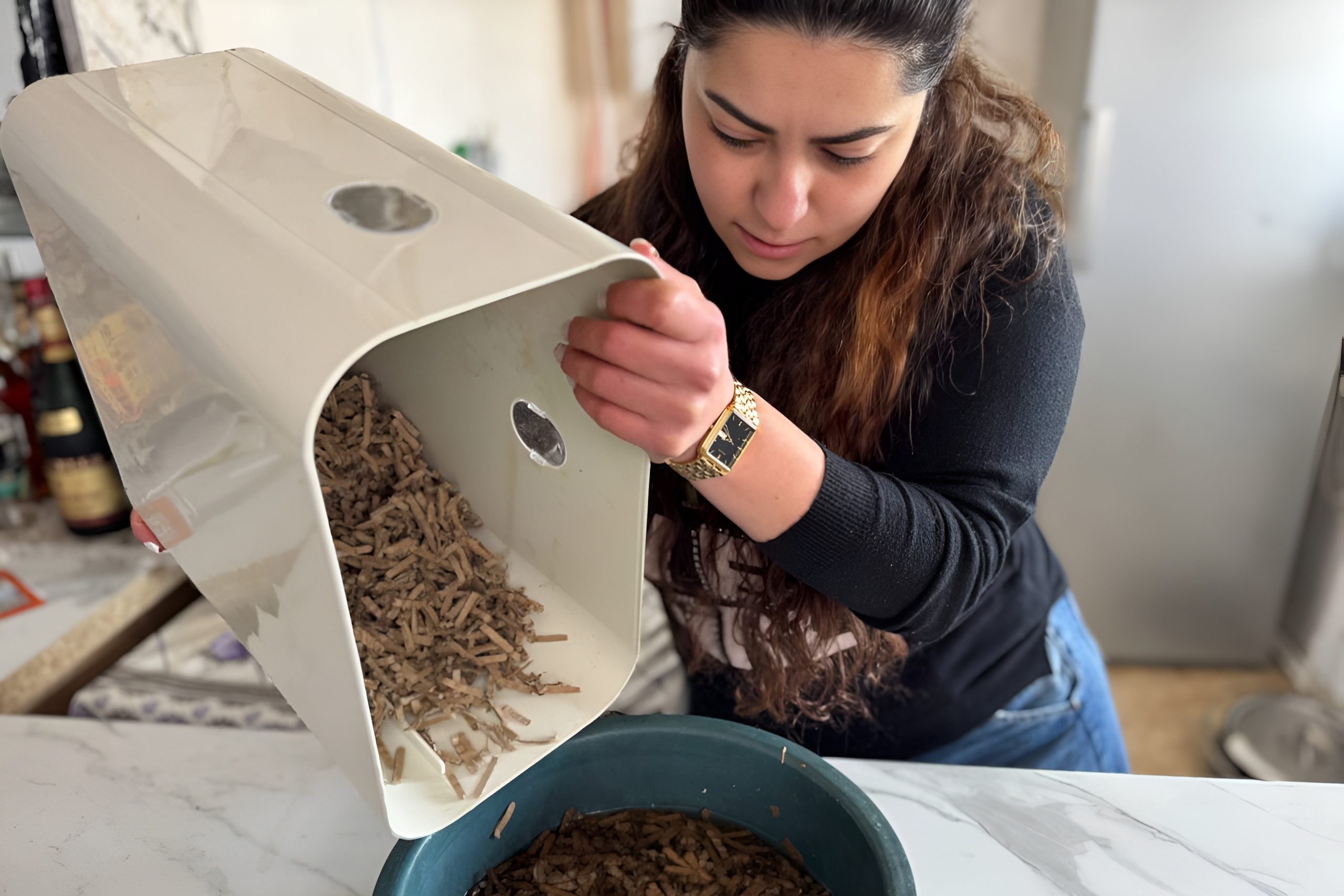
She visits schools, kindergartens, and neighbourhoods, showing residents how to properly collect and sort waste, and demonstrating how it is possible to give waste a second life.
A vision for the future
But that is not all. Today, Emma is also pursuing a Master’s degree in Chemistry to deepen her understanding of materials and recycling processes. She aims to grasp not only how to recycle but also how to safely manage a product at the end of its life cycle, minimising environmental impact. This comprehensive approach enables her to view her work through a broader lens – not just focusing on creation, but also considering responsible consumption and environmental stewardship, and developing solutions that deliver sustainable, long-term value.
Currently, Emma’s home serves as a small workshop and studio. Yet her ambitions extend far beyond these walls. She envisions establishing a waste recycling centre in Sevan, generating employment, empowering women and youth, and offering masterclasses and educational programmes to foster community engagement.
Emma’s journey demonstrates that even modest initiatives can spark significant change when fuelled by vision, persistence, and dedication. In Sevan, waste is transformed into raw material, raw material into art, and art into a catalyst for community development.
The post Emma’s story: when waste becomes raw material, art, and a catalyst for community change appeared first on EU NEIGHBOURS east.


